


Caring for a carnivorous plant
Caring for Carnivorous Plants: 10 Expert Tips
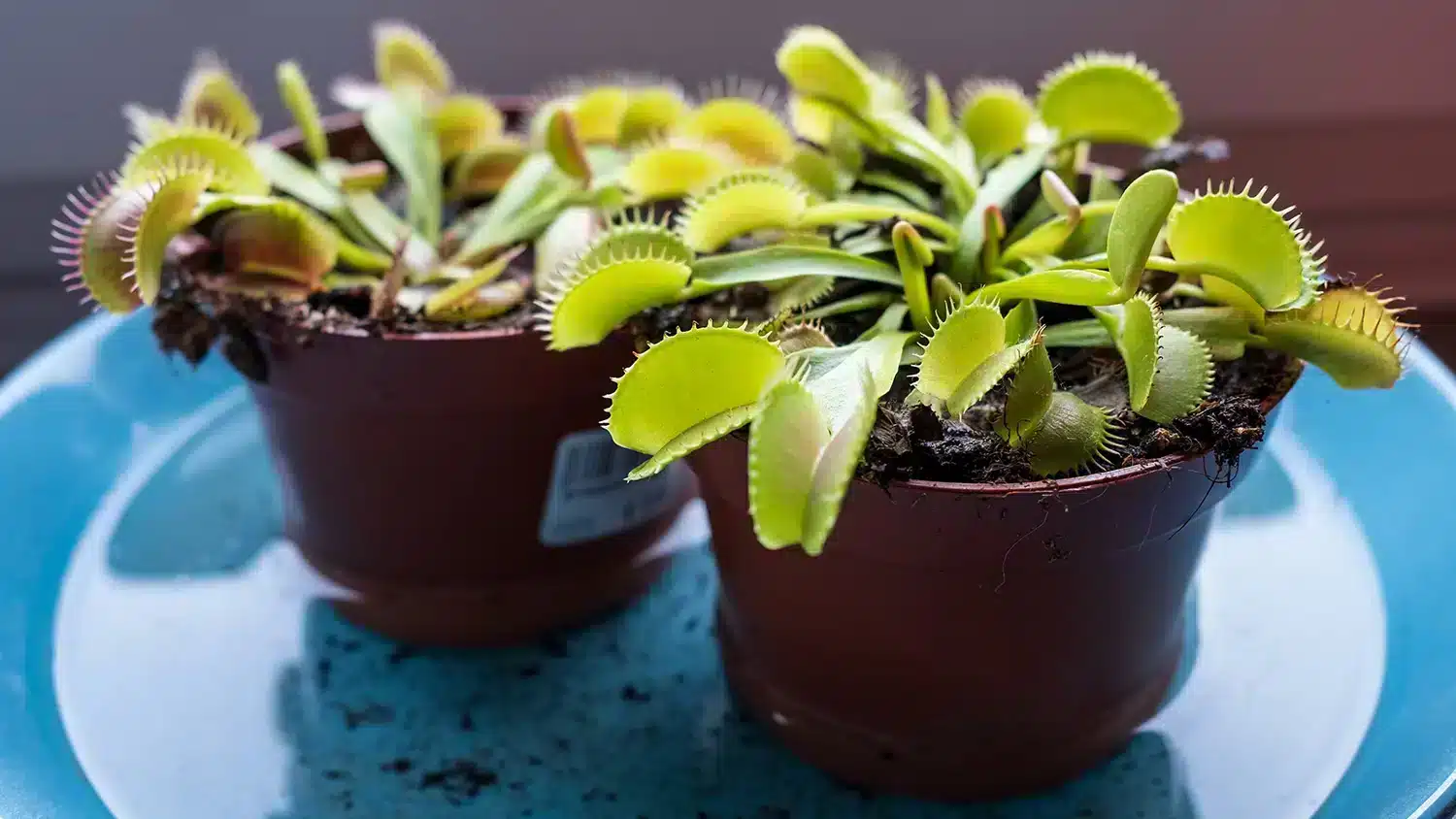
How to Care for Your Carnivorous Plant
Carnivorous plants are beautiful, whimsically shaped plants that are also useful. They provide a sustainable way to keep unwanted insects at bay. Use these care instructions to ensure your carnivorous plant stays in top condition. With our tips, you’ll know exactly how to water carnivorous plants, what their light, temperature, and humidity preferences are, and what extra care the plant needs to thrive.
1. Watering a carnivorous plant
Carnivorous plants are marsh plants and, in the wild, grow in very nutrient-poor soil. This means there are almost no nutrients in the soil. Carnivorous plants have therefore adapted to obtain nutrients in a different way. Excessive nutrients in the water (and consequently in the soil) are harmful to these plants. Tap water in Europe is often hard water and contains various minerals and calcium. Carnivorous plants do not tolerate this well. To give carnivorous plants the best chance to thrive, it is advisable to water them only with rainwater. Boiled water, which still contains lime, or spring water, which contains many minerals, are therefore not recommended. In fact, only rainwater—just as these plants receive in nature—is suitable for carnivorous plants. With all our sets and terrariums, you receive a water level indicator and a bottle of Rain Drops, 100% rainwater, to water the plants properly and maintain the correct water level. Never pour water into the tubes of pitcher plants. The plant itself regulates the correct level in the pitchers.
2. The best spot for your carnivorous plant
Place the carnivorous plant in a bright, sunny spot. All carnivorous plants need a sunny spot. The Venus flytrap can never get enough sunlight, so it can be placed in full sun. The other carnivorous plants also like sunlight, but it’s best to place them in a bright spot out of direct sunlight. In the summer, the plants prefer indirect sunlight. Carnivorous plants can easily withstand a mild winter. So it’s no problem to put the plants outside.
3. Feeding Your Carnivore
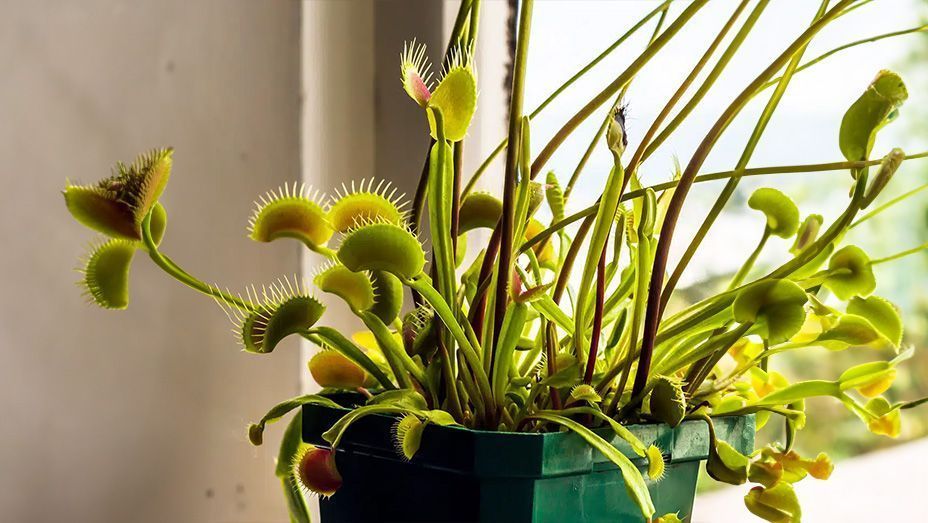
Unlike other plants, carnivorous plants don’t thrive on plant food. In fact, the poorer the soil, the better these plants will do. Carnivorous plants naturally originate from areas with very poor soil. This is one of the reasons why this plant species began eating insects. So, giving them plant food is definitely not recommended, though feeding them an insect every now and then is okay. Just don’t do it too often—too much of a good thing can be harmful! The main sources of nutrition for this plant species are, after all, plenty of water and sunlight.
4. Repotting
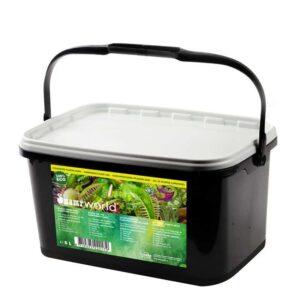
The growing season for carnivorous plants begins in March. It’s best to repot the plant right at the start of the growing season. This gives the plant enough time to recover properly. If you repot the plant during the growing season, its growth will slow down. A carnivorous plant has poor root development because it does not draw nutrients from the soil. You can easily remove the plant from the soil. Use a small trowel to dig the plant out and catch it, from the side, in your hand. It is best not to remove the plant from the pot from above, as this risks damaging it. A carnivorous plant needs nutrient-free soil; use our specially developed carnivorous plant soil for this purpose. Regular potting soil contains various nutrients that carnivorous plants cannot tolerate. These plants have never learned to filter out substances from the soil, so they absorb everything in it. The carnivorous plant soil is a light, airy mixture and contains only the nutrients a carnivorous plant needs.
5. Never actually feed your carnivorous plant real meat
As logical as it may seem to feed a carnivorous plant meat, this is definitely not the idea! Real meat will cause the traps to rot. Feeding it an insect every now and then won’t hurt. However, only do this with plants kept indoors. Plants kept outdoors will catch enough insects on their own.
6. Winter break
Plants have a growing season and a dormant period. When these periods begin often depends on the weather. The earlier it gets warm or the longer it stays warm, the more sunlight and nutrients the plant receives. The plant will then start growing earlier or continue growing longer. The growing season usually begins in March and ends in September. The plants then enter a state of winter dormancy. The plants withdraw, the leaves fall off or turn black. The plant sometimes looks dead, but nothing could be further from the truth. The plant is conserving all its energy to survive until spring. After that, the plant revives and begins a new growth cycle. During the dormant period, the plant needs water, but not as much as during the growing season. It is important to keep the soil moist, but not too moist. Providing extra food (insects) is not necessary. This confuses the plant and hinders growth in the spring.
7. Remove damaged leaves
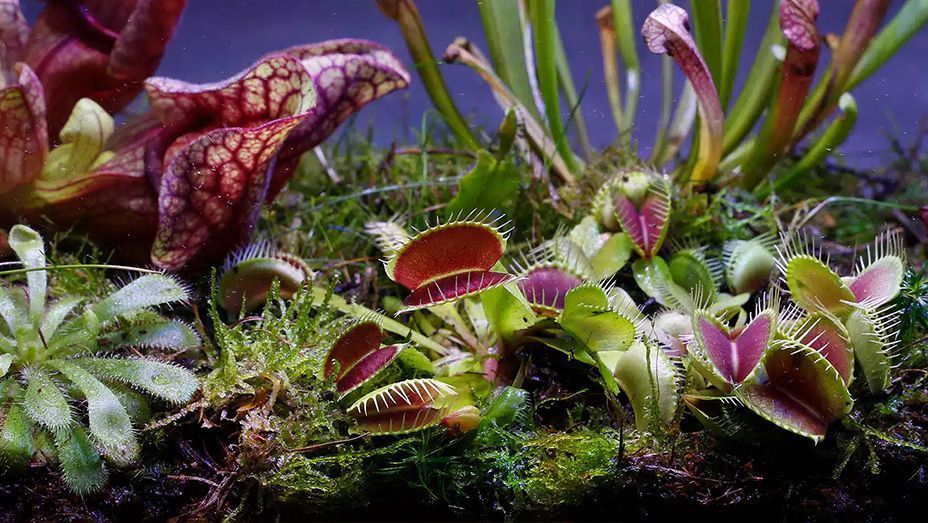
Always remove the dead leaves. All plants undergo a continuous process of leaf renewal. This is no different for carnivorous plants. As the traps age, they die off. You can trim the traps back to 0.5–1 cm from the base. During the growing season (spring), the traps will grow back. The traps and leaves of a Venus flytrap can also turn brown or black. Each individual leaf has a lifespan of about three months. If the Venus flytrap’s traps are touched regularly, they will become exhausted more quickly and die off. You can simply remove the dead leaves so that more energy can go to the other green leaves. New leaves will grow from the center of the plant. By removing the dead leaves, you also prevent mold from taking hold.
8. Wet feet
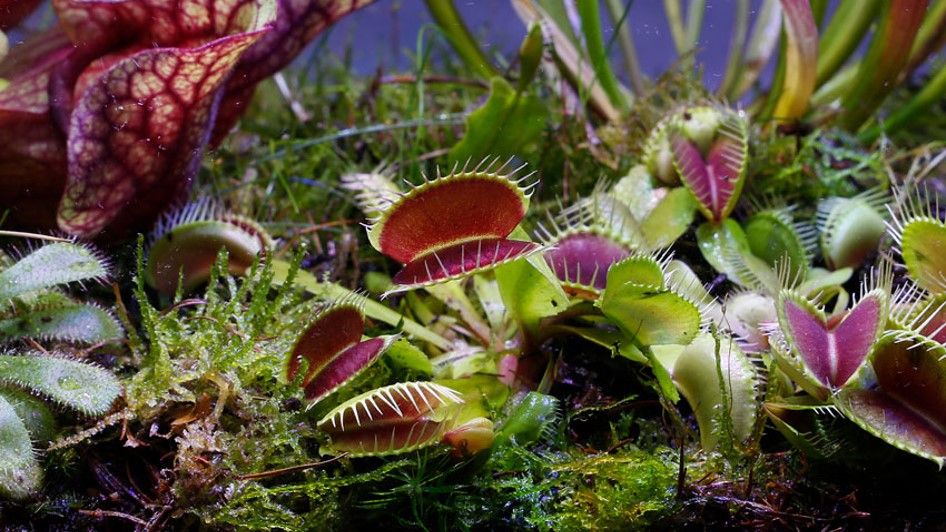
Carnivorous plants are marsh plants. They thrive in moist conditions. There are several ways to achieve this. For example, by using sphagnum moss. This is a ground cover that retains moisture well. It is therefore ideal for marsh plants, which do not like to be kept dry. Additionally, this moss contains no nutrients, making it perfectly suited for carnivorous plants. For an extra natural look, you can also use natural moss. With its beautiful, deep green color, natural moss is very decorative. It gives any dish or terrarium a natural look.
9. Type of pot
It’s important to consider what kind of pot you put your carnivorous plant in. As mentioned above, carnivorous plants also absorb substances that aren’t good for them. If you place the plant in a terracotta pot, it will absorb substances from the terracotta. These substances are harmful to the plant and could even kill your carnivore. It is better to place carnivorous plants in a non-porous pot, such as plastic or glass. Glazed pots are also suitable.
10. Don’t touch the meat-eater unnecessarily.
In the Venus flytrap, if the trap is touched twice within 20 seconds, it snaps shut. In this carnivorous plant, the traps die after opening and closing about 10 times. The trap then turns black and should be removed. This is a normal cycle, and new traps will grow from the center of the plant. If you keep touching the trap, it will die sooner.
Types of carnivorous plants
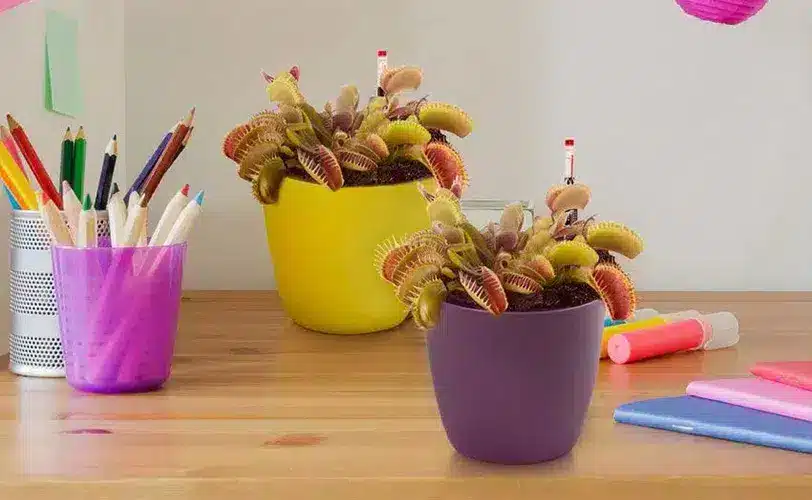
Care for Venus flytraps
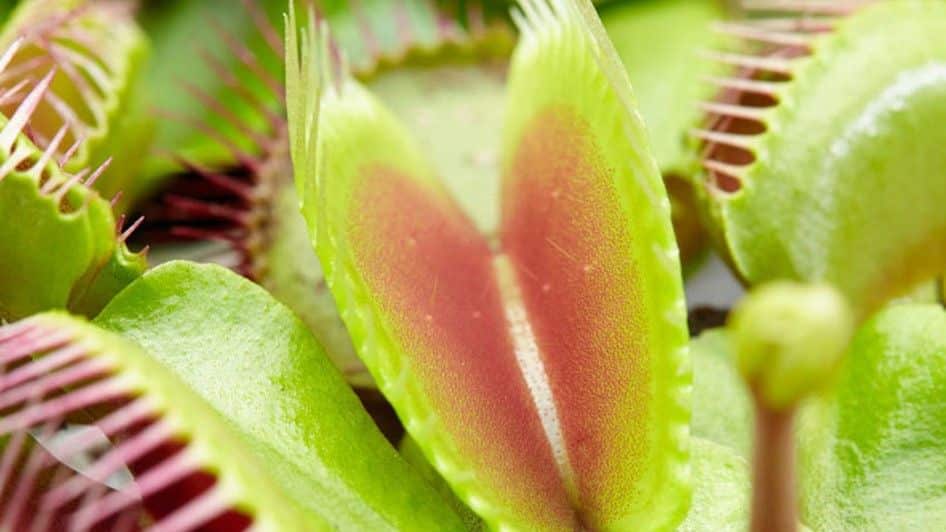
Dionaea muscipula, also known as the Venus flytrap, is one of the most remarkable and fascinating marsh plants. With its beautiful leaves, which resemble little mouths with sharp teeth, it catches insects and then digests them. The inside of the leaves is red and covered with hairs. As soon as a hair is touched twice, the trap snaps shut. It’s a clever mechanism, because by waiting until the second touch, the trap doesn’t snap shut unnecessarily if, for example, a leaf or raindrop falls on it. Once the trap is fully closed, the plant secretes a fluid containing enzymes that digest the insect. Carnivorous plants are marsh plants and therefore prefer to have their feet wet in the soil.
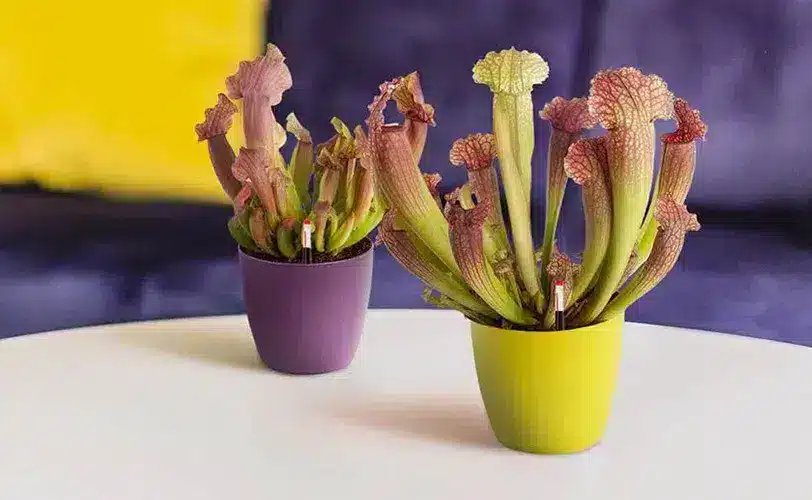
Trumpet Cup Plant
The Maroon and Juthatip, also known as trumpet pitcher plants or Sarracenia, are the most impressive marsh plants. These reddish-brown trumpet pitcher plants catch insects using leaves shaped like pitchers. The pitchers contain nectar that lures the insects. Once inside the cup, there is no turning back, and the insect is digested. Perfect for summer!
Carnivorous plants are marsh plants and prefer to have their feet wet in the soil. This mix includes water gauges to help you monitor this. A bottle of Rain Drops, 100% unpurified rainwater, is also a must-have. Tap water contains lime and all kinds of minerals from the soil. These minerals make tap water hard, and this is not good for the growth of carnivorous plants.
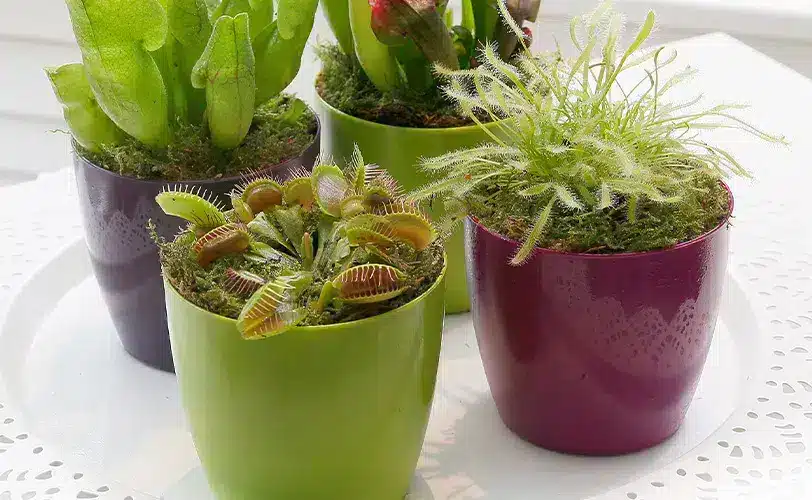
Sundew
The Sundew (Drosera) captures and digests insects using a sticky substance found on the plant’s tentacles. The insect provides the nutrients that the plant cannot absorb from the soil. Carnivorous plants grow in very nutrient-poor soil, so they must obtain their nutrients from elsewhere.
Carnivorous plants are marsh plants and prefer to have their feet wet in the soil. Sundew is part of our carnivorous plant mix. With this mix, you’ll receive water gauges to ensure the plants don’t dry out. A bottle of Rain Drops, 100% unpurified rainwater, is also a must-have. Tap water contains lime and various minerals from the soil. These minerals make tap water hard, which is not good for the growth of carnivorous plants.
Frequently Asked Questions About Carnivorous Plants
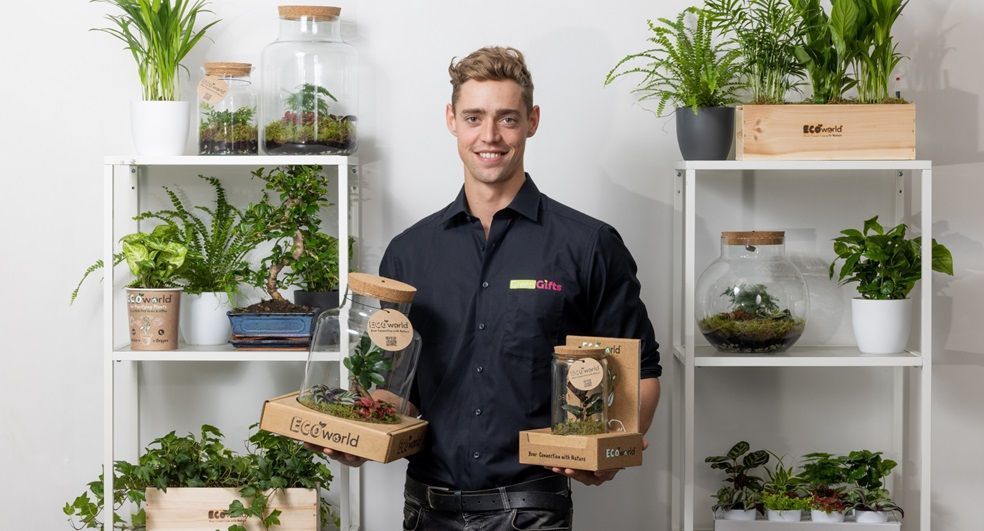
The Venus flytrap (Dionaea muscipula) is the best mosquito catcher. In addition to Dionaea, there are several other species of carnivorous plants, each of which catches insects in its own way. The Drosera, or sundew, has a sticky trap. The plant consists of leaves with tentacles coated in a sticky substance. As soon as an insect lands on the leaf, it cannot escape, and the digestion process begins. The Sarracenia (pitcher plant) has a pitcher trap where insects, once inside, cannot escape. This is due to the downward-pointing hairs inside the pitcher. Once inside, there is no escape for the insect… Sarracenia is a collective name for various types of pitcher plants, each with its own unique appearance. The most well-known species are: Maroon, Venosa, and Juthatip. To introduce you to all these different species, GreenGifts has put together a mix for you. You’ll receive 1 plant of each species, including water gauges, decorative pots, and Raindrops.
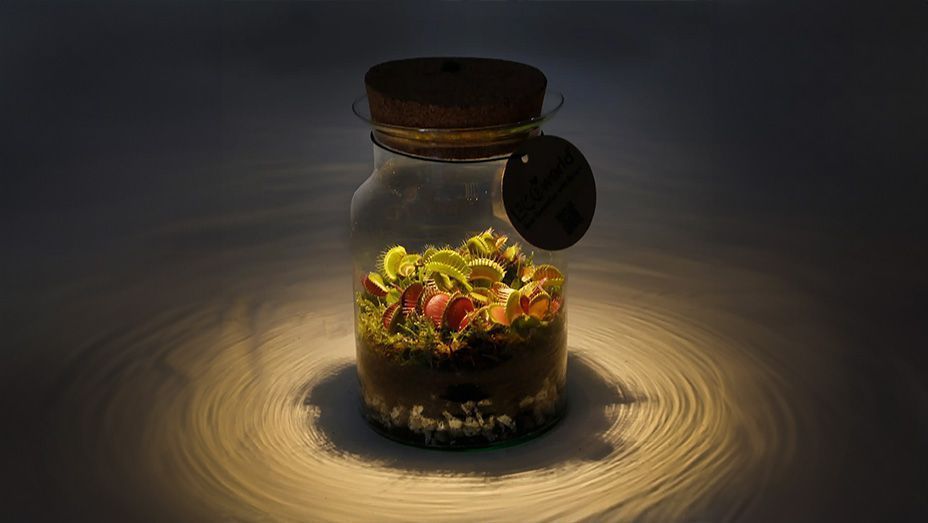
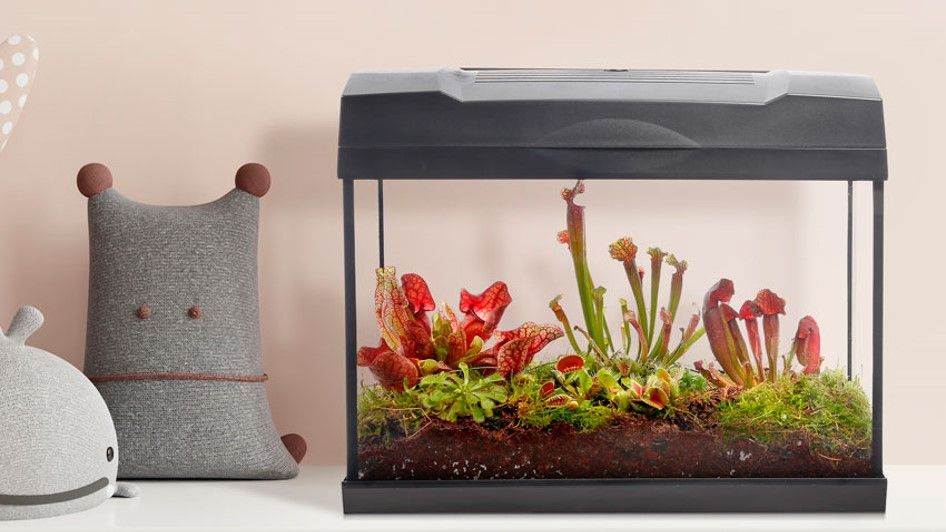
In our shop, we offer a variety of terrariums that come with a complete step-by-step guide on how to create your own carnivorous plant terrarium. These terrariums are equipped with LED lighting. This lighting attracts insects to the terrarium, where they are captured by the carnivorous plants. This also makes the terrarium ideal for the bedroom. In a child’s room, a terrarium can also serve as a nightlight. Each terrarium comes with all the necessary supplies, such as plants, soil, moss, a water gauge, and Raindrops. For true carnivorous plant enthusiasts, we recommend theXL terrarium—a large terrarium featuring five different carnivorous plants in a larger pot size. Everything is included—such as soil, moss, Raindrops, and a water gauge—so you can get started right away on setting up your own carnivorous plant terrarium.
Carnivorous plants are marsh plants. They thrive in moist conditions, so make sure the soil never dries out. Since carnivorous plants are sensitive to nutrients—such as minerals and calcium found in tap water—it’s best to water them with rainwater.
Carnivorous plants are hardy, and with the right care, you can enjoy them for years to come. The most common mistake that causes problems for a carnivorous plant is not providing the right kind of water. Soil that’s too dry or water that’s too hard can be disastrous for your carnivorous plant. Another reason why a carnivorous plant might develop brown leaves is sunburn. A carnivorous plant loves plenty of light, but if the plant is placed in direct, bright sunlight behind a window in the middle of summer, the leaves can burn. Moving the plant to another bright spot, but out of direct sunlight, can save it.
It depends on whether the plant has actually caught an insect, or whether the trap has snapped shut after being touched without an insect having fallen into it. In the latter case, it takes a few hours for the trap to open again.
Once a carnivorous plant has caught an insect, it takes quite a long time for the entire insect to be digested. Depending on the size of the insect, it can take anywhere from 15 days to a month for the digestive juices in the plant’s pitcher to do their work.
This is not recommended. Carnivorous plants thrive in the sun. Watering them increases the risk of sunburn.
The Venus flytrap is a trailing or hanging plant. When one of its traps turns black, it is simply going through a natural process. The main reason a trap turns black and dies is that it has reached the end of its lifespan. Each individual trap on the plant has a lifespan of about three months, during which it catches 1 to 4 insects. The leaves die off at the same time as the trap, and new ones grow back. You can simply remove the dead leaves so that more energy can go to the green leaves.
Tip: It’sbest to handle the flowers as little as possible and avoid feeding the plant insects.
No, do not fill the pitcher plants with water. If water accidentally gets into the pitcher plants, it will not harm them.
Sarracenia species (pitcher plants) are the most resilient in this regard. These species are also hardy down to -25°C and can survive even when completely buried in snow.
Carnivorous plants like to have their feet wet. You can easily place the plants in a few centimeters of water. The included water gauge also indicates when the plants need watering again. Make sure the gauge is always above “opt” and between “max.”
The blackening of your carnivorous plant’s traps is usually a natural reaction. This often happens once the traps have fulfilled their purpose, such as catching and digesting insects. Once this process is complete, the traps die off and turn black. This is completely normal and part of the plant’s life cycle. A new trap will form on its own over time.
To help your carnivorous plants survive the winter, it’s best to move them to a cooler spot, away from the window. Although they need plenty of daylight, the air near a window can get too cold in winter, especially if there’s a draft.
An ideal spot would be a cool, bright room where the temperature doesn’t fluctuate too much, but where they still get plenty of natural light. This helps the plants during their dormant period without exposing them to excessive cold or drafts.
6 Expert Tips for Setting Up Your Carnivorous Plant Terrarium
Discover the fascinating world of carnivorous plants with our terrarium kits. They feature fascinating species such as the Venus flytrap, sundew, and pitcher plants, which can catch mosquitoes and other small insects. Our sets are easy to care for and make a unique addition to any space. They offer a glimpse into the natural characteristics of these plants and are perfect for both beginners and experienced enthusiasts.
1. Placing the terrarium
Place the carnivorous plant terrarium in a spot where the airflow is steady and where it won’t be exposed to drafts. Do not place the terrarium directly next to a window, as cold or warm air can come through the window. Place the terrarium in a spot where it gets plenty of daylight; the plants need this to grow. Finally, it’s important to place the terrarium in a spot at room temperature. Have you found the ideal spot for your terrarium? Great! Take the lid off the terrarium and start setting it up.
2. Coconut tablets
Spread the Koks tablets whole across the bottom of the terrarium and add 75 milliliters of water per tablet. Once you’ve done this, mix everything together until you have a layer of soil covering the bottom of your terrarium. Is the soil soggy? Then you’re doing it right! Carnivorous plants love to have their “feet” in soggy soil. After all, these are plants that originally live in swampy areas.
3. Terrarium Setup
Dig a small hole in the soil and remove the pot from the carnivorous plant. Once you’ve done this, place the plant in the hole. Repeat this process with the other carnivorous plants until your terrarium is full of plants.
4. Install a water meter
Happy with how your carnivorous plants look in the terrarium? Great! Finally, make a small hole in the soil and place the water gauge inside. Make sure to insert the water gauge into the soil with the black side facing down.
5. Decorating
You're almost there! Now it's time to decorate. Take the included moss out of the bag and cover the soil with it to create a nice green top layer. This will make the plants stand out even more!
6. Watering
Carnivorous plants love water more than anything! But be careful: carnivorous plants are picky and prefer rainwater or distilled water over tap water. Tap water contains traces of lime, which carnivorous plants don’t tolerate well. Water the plants in the terrarium until the red indicator on the water gauge is all the way up. Does the water gauge drop after a few days? Then add a little extra water so the plants’ roots stay wet, just the way they like it.
Tip: Does the water meter’s indicator not go up after watering? Try rinsing the water meter thoroughly under the faucet—there are probably some bits of soil stuck inside it 😉