

Step 5: Balance
Marsh plants: maintaining ecological balance in the pond
Marsh plants help maintain balance in all layers of your pond and stabilize the ecosystem.
Simon's advice
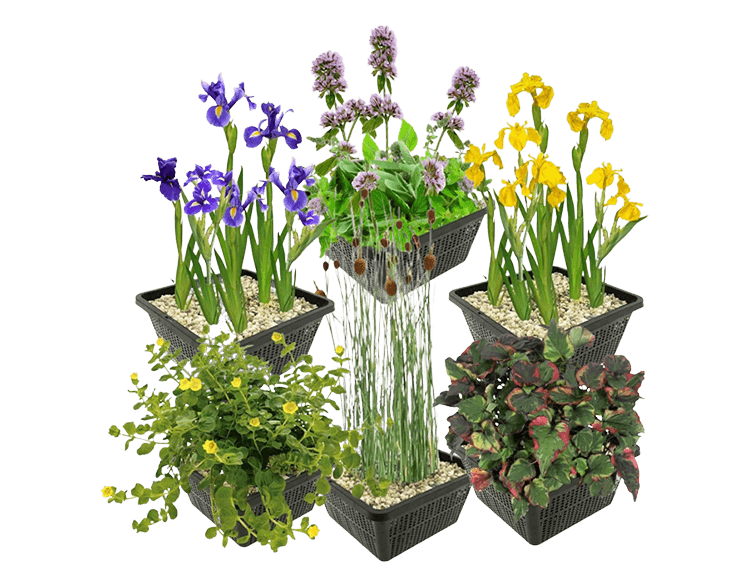
20 plants
Why wetland plants are essential
Marsh plants act as your pond’s natural filter and prevent algae growth
Nutrient absorption
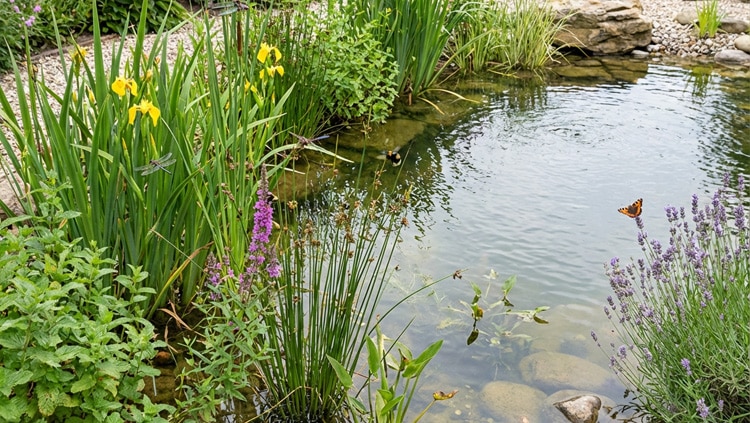
Marsh plants absorb excess nutrients from the water, thereby preventing algae growth.
Clear water
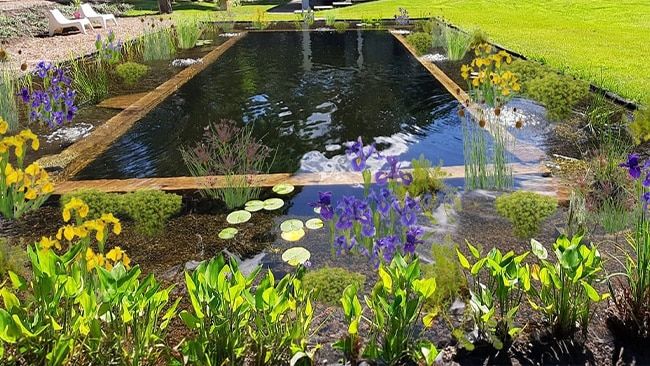
By combining oxygenating plants in shallow areas, the pond water remains clear all year round.
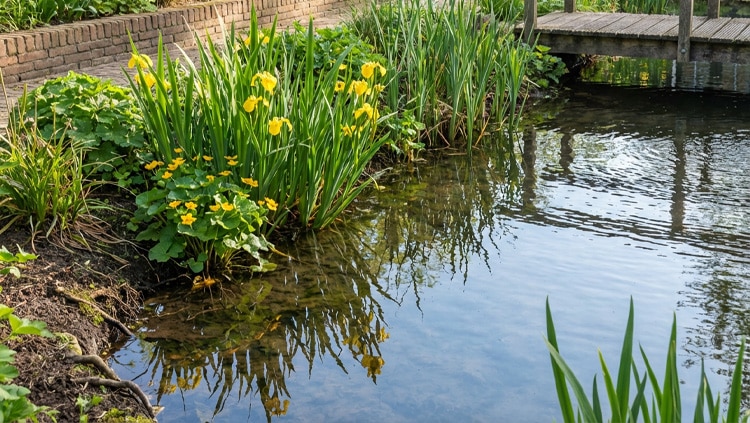
Natural transition
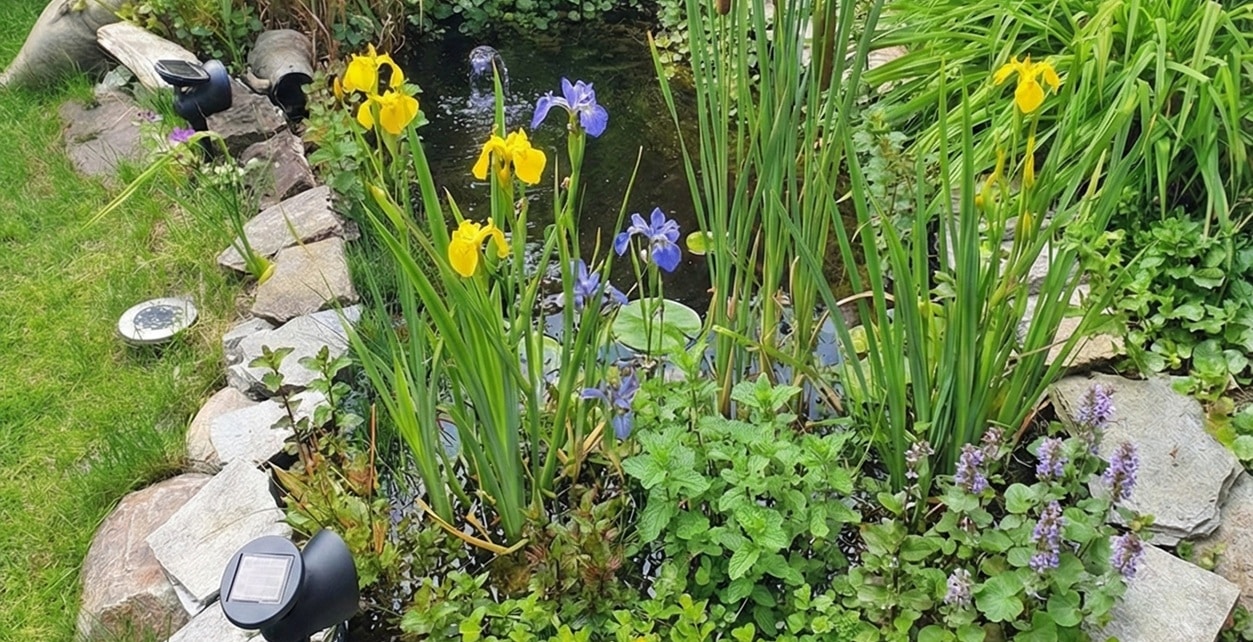
They create a beautiful, natural transition between the water and the edge of your pond.
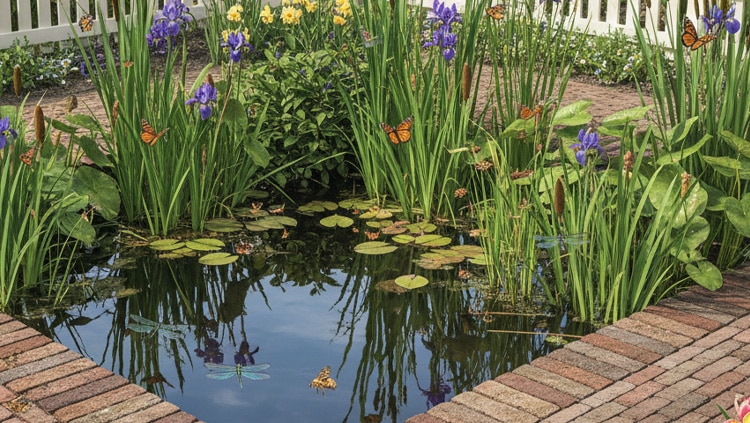
Attracting insects
Marsh plants attract beneficial insects that contribute to a healthy pond ecosystem.
The more densely the edges are covered with healthy plants, the more stable and clear the pond will remain throughout the season. Marsh plants are natural nutrient scavengers that absorb excess nutrients before algae can take advantage of them. Especially in shallow areas, the water warms up quickly, which further stimulates algae growth. By planting plenty of these plants here and combining them with low-growing oxygenating plants in baskets, the water stays clear and healthy.
How marsh plants protect your pond
A natural filtration system that operates continuously
Extracting nutrients
Marsh plants absorb nitrogen, phosphorus, and other nutrients before algae can use them.
Cooling shallow areas
Dense vegetation in your pond prevents shallow areas from heating up quickly, which significantly inhibits algae growth.
Natural transition
Create a gradual, natural transition between land and water to form a harmonious whole.
Attracting insects
Bees, dragonflies, and butterflies find nectar and nesting sites among the marsh plants.
Stabilizing riverbanks
Root systems help stabilize the soil and prevent erosion along the pond's edge.
Open year-round
Even during winter dormancy, root systems continue to absorb nutrients and filter water.
Choose your aquatic and marsh plants
The purifying heart of the pond
Aquatic plants step 4) and marsh plants (step 5) work best together.
That is why they have been combined here into a single complete package.
Rule of thumb: 40 plants per 1,000 liters of pond water
20 Aquatic plants 20 marsh plants
This ratio is already included in the packages below.
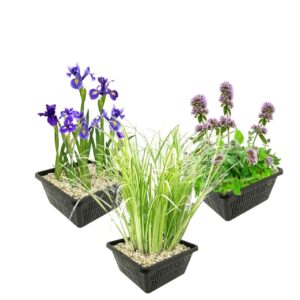
Swamp and Aquatic plants 400
• Purifies water and prevents thread algae
• 12 purifying Aquatic plants
• Placement: 1–10 cm
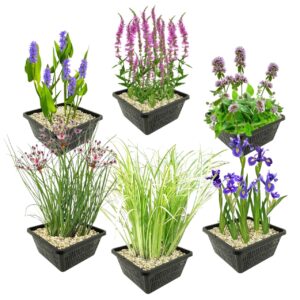
Swamp and Aquatic plants 1.250
• Purifies water and prevents thread algae
• 24 purifying Aquatic plants
• Depth: 1–10 cm
Swamp and Aquatic plants 3.000
• Purifies water and prevents thread algae
• 48 purifying Aquatic plants
• Placement: 1–10 cm
Swamp and Aquatic plants 6.000
• Purifies water and prevents thread algae
• 96 hardy Aquatic plants
• Depth: 1 to 10 cm
Swamp and Aquatic plants 10.000
• Purifies water and prevents thread algae
• 144 purifying Aquatic plants
• Placement: 1–10 cm
What others are saying
More than 2,800 satisfied pond enthusiasts have already chosen us
Our customers give us an average rating of 4.7/5 ⭐⭐⭐⭐⭐
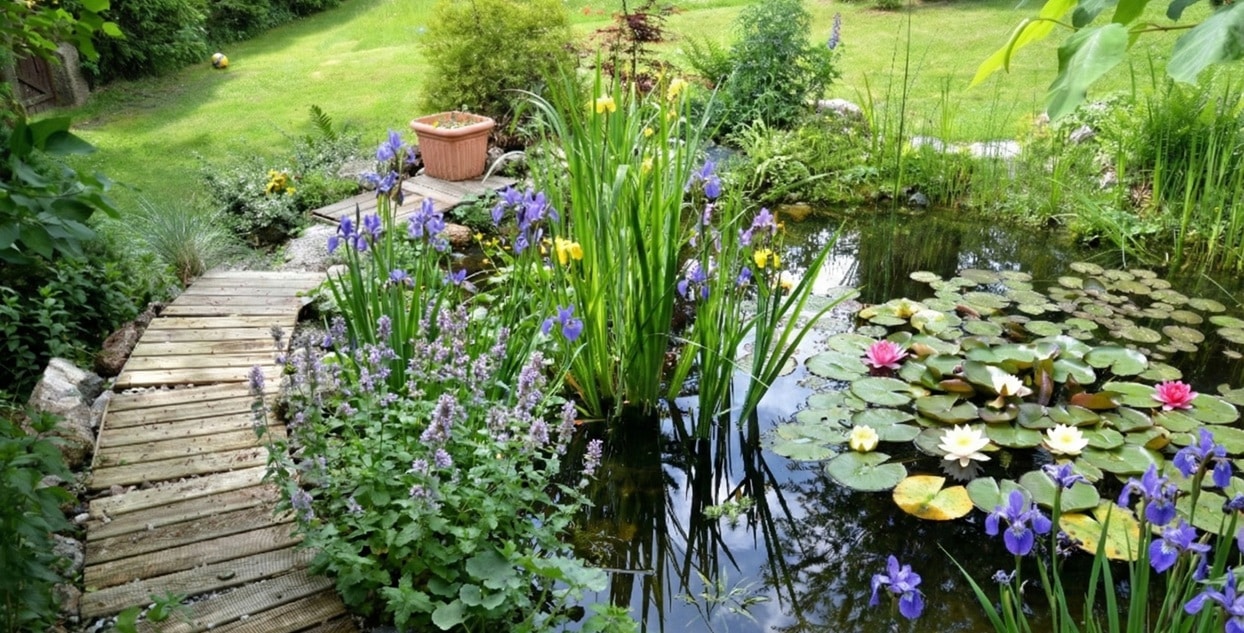
“The marsh plants really complete my pond. They’re growing like crazy, and the transition to the garden now looks beautifully natural. The water stays much clearer, too!”
— Marnix Boender
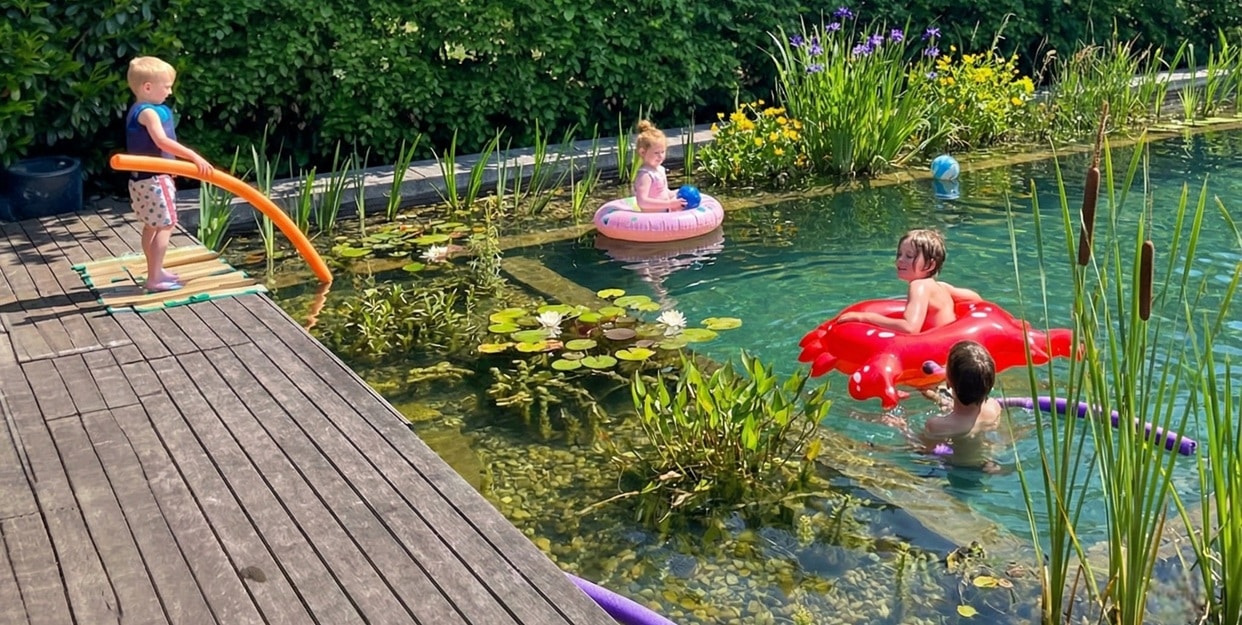
“Wow, what a difference! The plant filter and part of the swimming area used to be green, but now, with the marsh plants mixed in with all the other plants, the water is crystal clear. And it attracts so many dragonflies!”
— Annelies Verhaegen
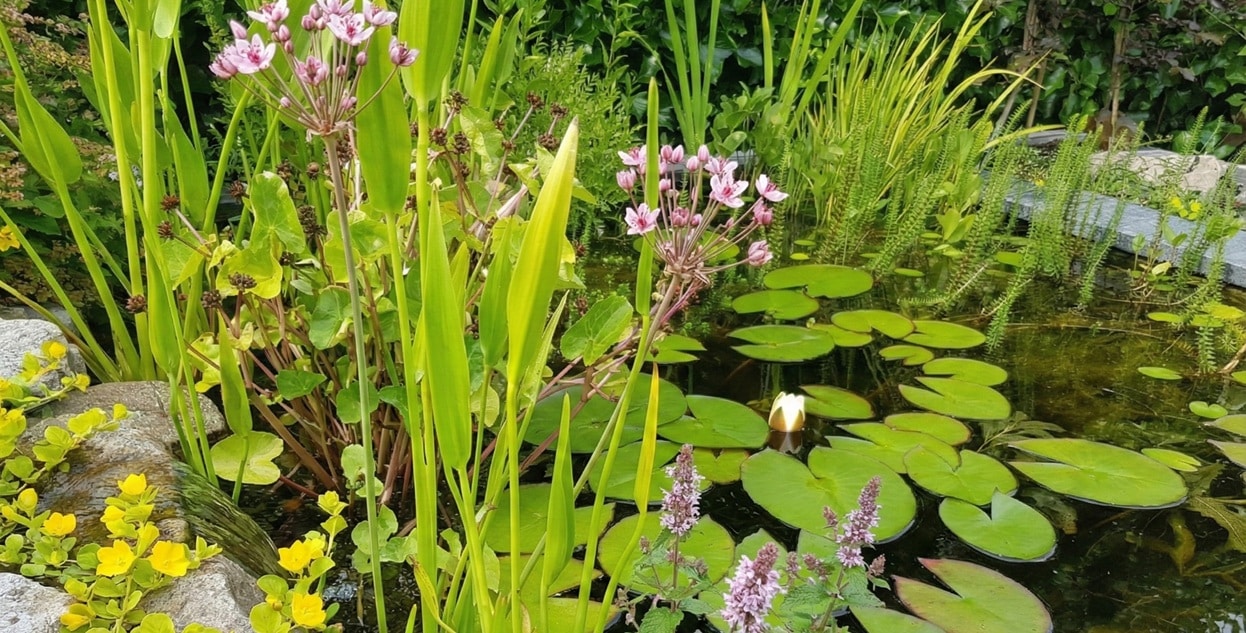
“Simon gave me perfect advice! The marsh plants give it a natural look, and I finally don’t see any algae in the shallow areas anymore.”
— Linda Martin
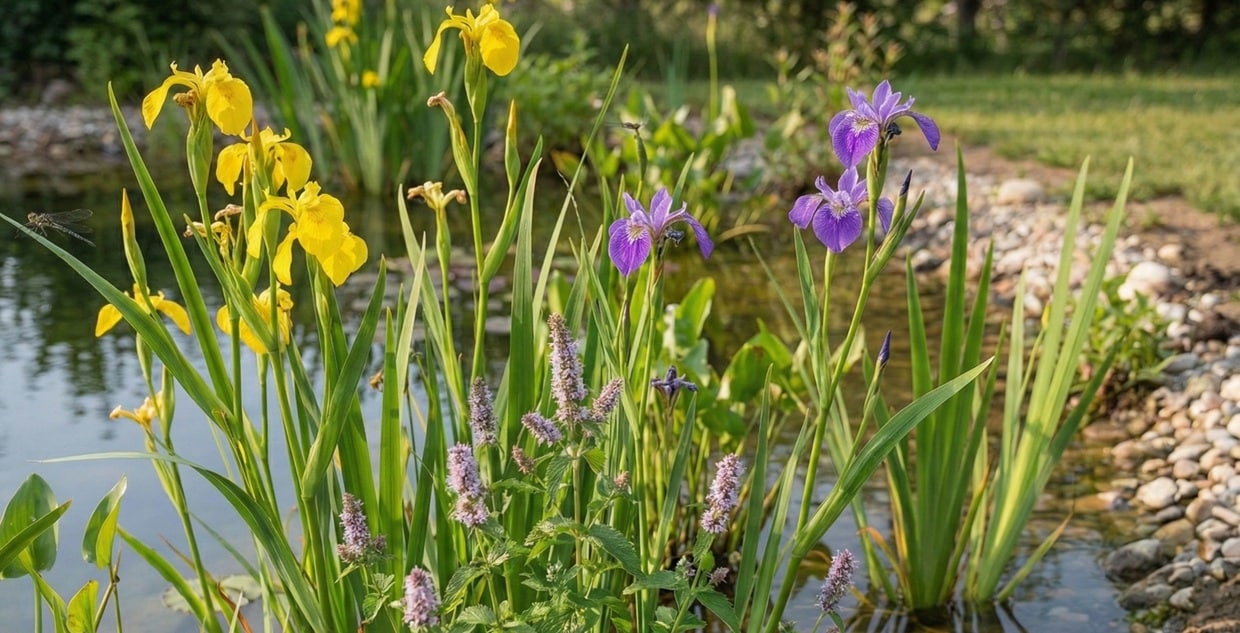
“The marsh plants work perfectly together and have really brought the pond into balance. The water is clear and the flowers are beautiful.”
— Jan Peeters
— Sofie Declerck
Frequently Asked Questions About Marsh Plants
Simon’s rule of thumb is clear: 20 marsh plants per 1,000 liters of pond water. So for a 2,000-liter pond, you’ll need 40 plants. This ensures sufficient nutrient uptake and a lush, natural look along the pond’s edge. Always combine them with oxygenating plants for the best results.
Plant marsh plants along the edge of the pond in shallow areas (0 to 30 cm deep). Areas that warm up quickly are particularly important, as algae will otherwise run rampant there. Combine marsh plants with low-growing oxygenating plants in baskets for maximum filtration and clear water.
The best time to plant is from March through September. But you can actually plant them year-round—our marsh plants are 100% hardy. It’s best to plant them early in the season so they can establish strong roots and start absorbing nutrients right away.
Actually, there’s no need! Just leave the foliage in place during the fall—it protects the plants in the winter. Wait until spring (March–April) to trim away the old foliage to make room for new growth. The fuller the plants are, the better they absorb nutrients.
Some varieties do indeed grow vigorously, but that’s exactly the point! The more biomass, the better the filtration. Are they getting too big? Then you can thin them out in the spring. Most varieties in our mixes stay neatly in place and don’t run wild.
All marsh plants absorb nutrients, but fast-growing species such as Typha, bulrush, and Myosotis the top performers. Our marsh plant mix intentionally includes a combination of fast and slow growers for optimal filtration throughout the season.