

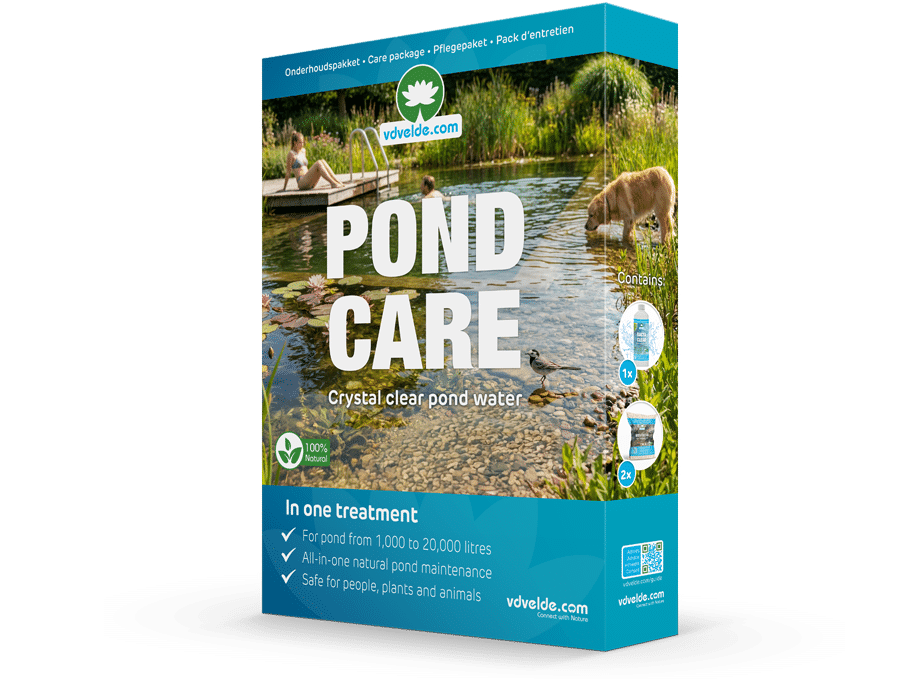
Step 4: Water Treatment
Aquatic plants: purify water and act as filters
Aquatic plants nutrients and inhibit algae growth, resulting in clear water.
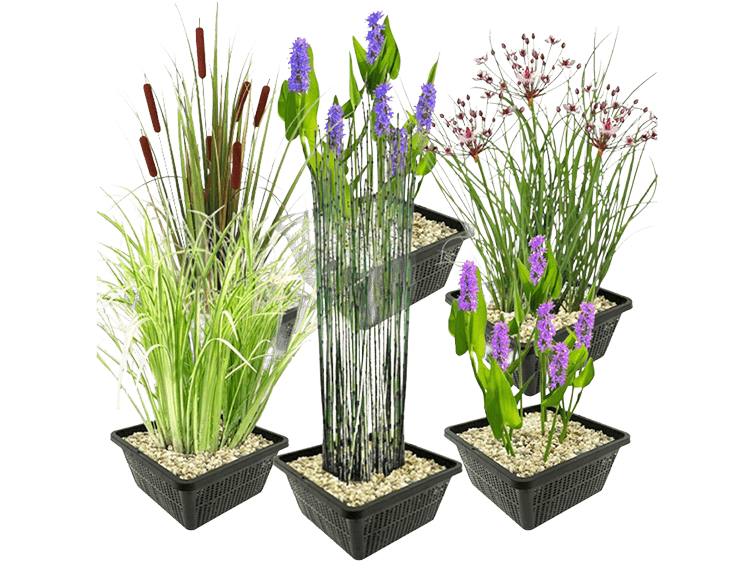
Simon's advice
20 plants
Why Aquatic plants Complete Aquatic plants Pond
Aquatic plants the deeper areas and help maintain balance throughout the water column
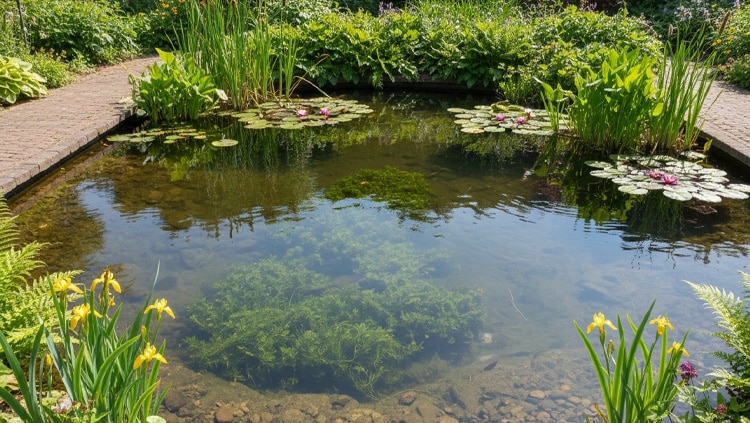
Plant at all depths
Aquatic plants at various depths (10 to 40 cm) and help filter water throughout all layers.
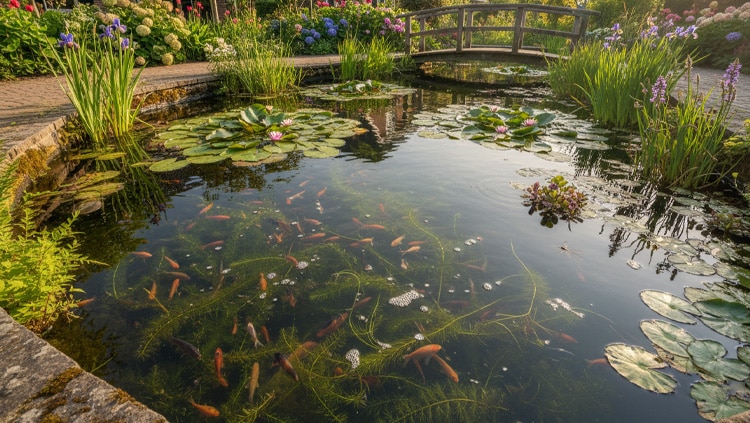
Biological balance
Together with oxygen-producing and marsh plants, they create a complete ecosystem that maintains its own balance.
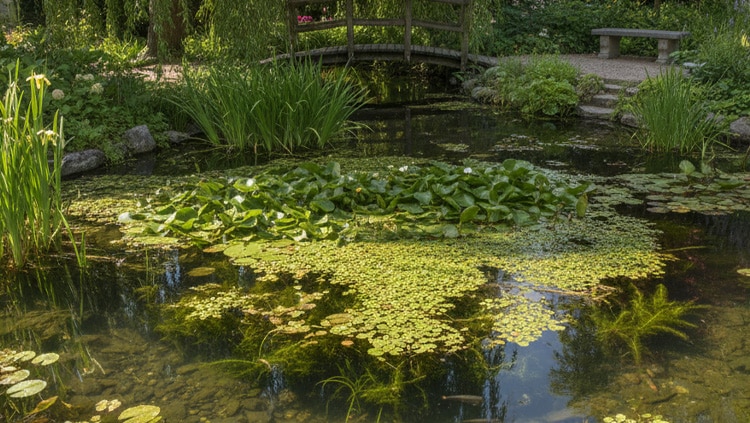
Temperature control
Dense vegetation prevents rapid warming in shallow and medium-depth zones where algae tend to grow.
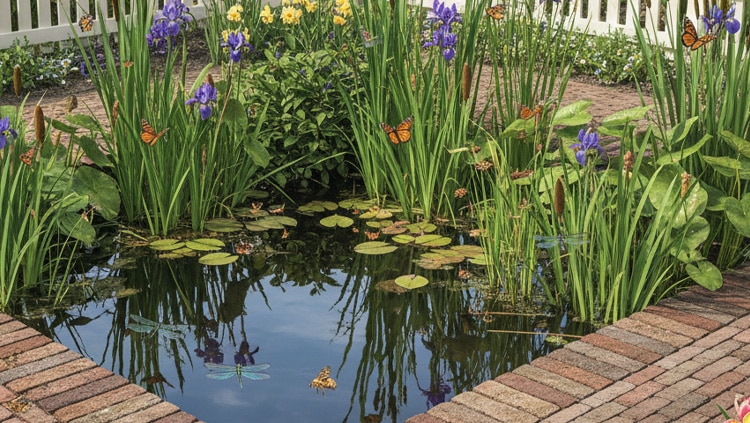
Visual variety
Aquatic plants structure and depth to your pond with flowers both above and below the water's surface.
Aquatic plants purify the entire water column. They absorb nutrients from the water, reduce algae growth, and keep the water clear from the surface to the bottom. Because they grow throughout the pond, they act as a continuous natural filter and help maintain the biological balance.
How Aquatic plants Help Balance Aquatic plants Pond
The finishing touch for a fully self-sufficient system
Fill all zones
Aquatic plants at various depths, ensuring that no area remains empty where algae can grow.
Continuous filtering
Aquatic plants also absorb Aquatic plants in deeper water layers and help purify your pond water.
Complete ecosystem
Together with the other steps, Aquatic plants are Aquatic plants final piece of the puzzle for ecological balance.
Blooming Beauty
Many Aquatic plants beautifully and add color to areas that would otherwise remain bare.
Additional shelters
Fish find shelter among the Aquatic plants various depths.
No chance for algae
A fully planted pond simply leaves no room for algae to grow.
Choose your aquatic and marsh plants
The purifying heart of the pond
Aquatic plants step 4) and marsh plants (step 5) work best together.
That is why they have been combined here into a single complete package.
Rule of thumb: 40 plants per 1,000 liters of pond water
20 Aquatic plants 20 marsh plants
This ratio is already included in the packages below.
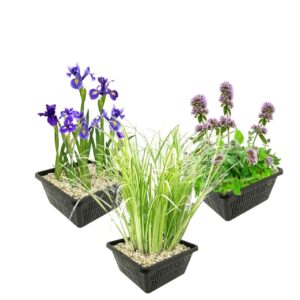
Swamp and Aquatic plants 400
• Purifies water and prevents thread algae
• 12 purifying Aquatic plants
• Placement: 1–10 cm
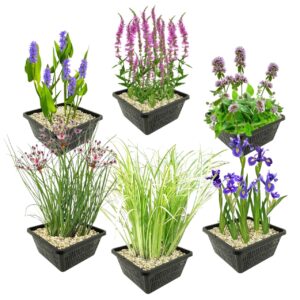
Swamp and Aquatic plants 1.250
• Purifies water and prevents thread algae
• 24 purifying Aquatic plants
• Depth: 1–10 cm
Swamp and Aquatic plants 3.000
• Purifies water and prevents thread algae
• 48 purifying Aquatic plants
• Placement: 1–10 cm
Swamp and Aquatic plants 6.000
• Purifies water and prevents thread algae
• 96 hardy Aquatic plants
• Depth: 1 to 10 cm
Swamp and Aquatic plants 10.000
• Purifies water and prevents thread algae
• 144 purifying Aquatic plants
• Placement: 1–10 cm
What others are saying
More than 2,800 satisfied pond enthusiasts have already chosen us
Our customers give us an average rating of 4.7/5 ⭐⭐⭐⭐⭐
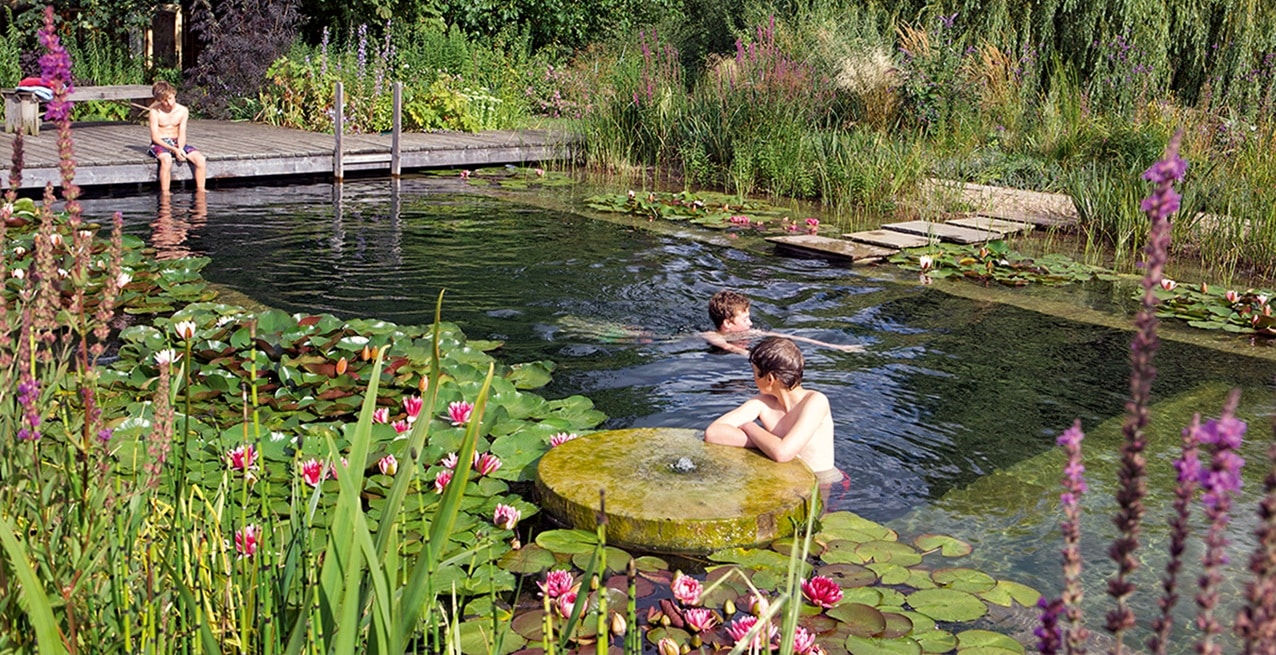
“This was truly the finishing touch! After completing all the steps, our plant filter is now fully planted, and the water is so clear that I can see the bottom while swimming.”
— Erik Meeuwes
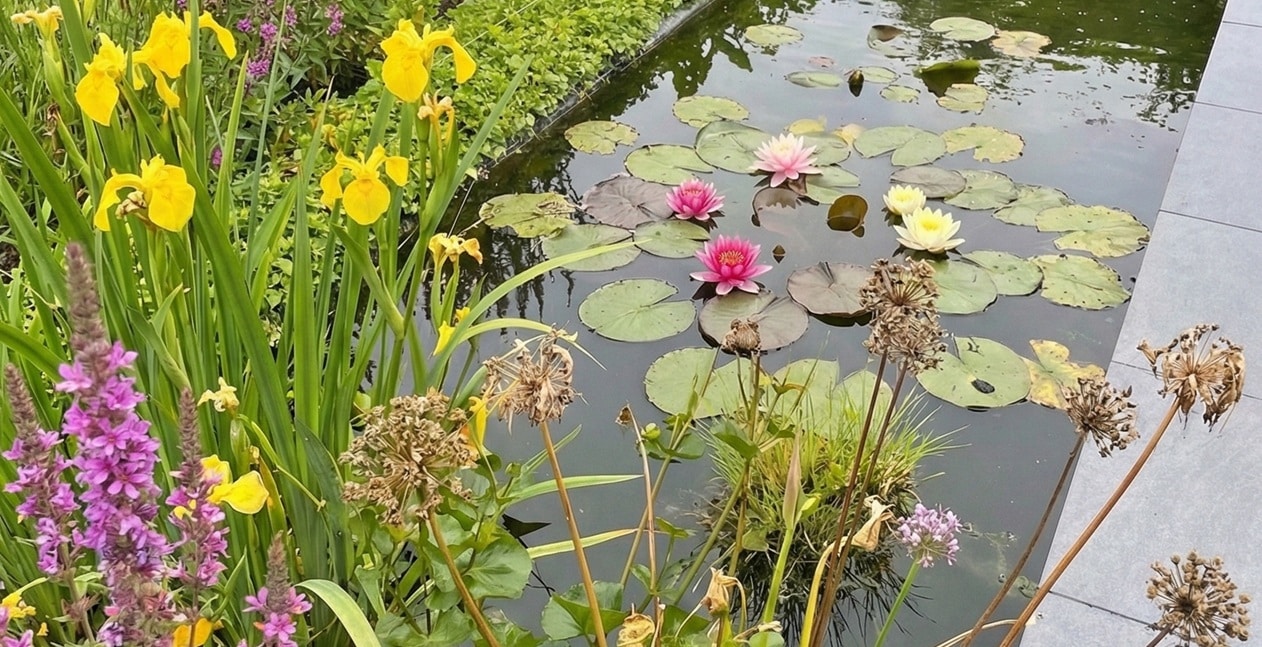
“The Aquatic plants filled in all the empty spots. My pond now looks like a natural pond, and the algae haven’t come back!”
— Els Koenders
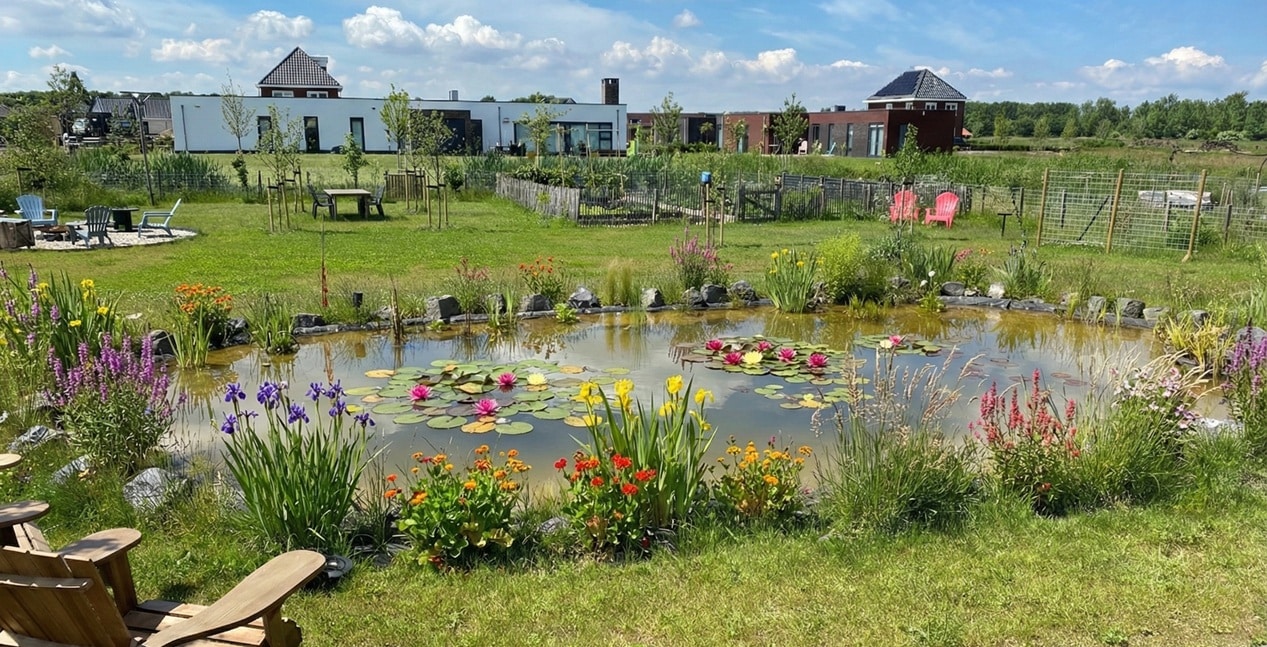
“Perfect advice! The deeper areas used to be bare, but now, with the Aquatic plants , every layer Aquatic plants covered. It really makes the difference between good and perfect.”
— Theo Bredero
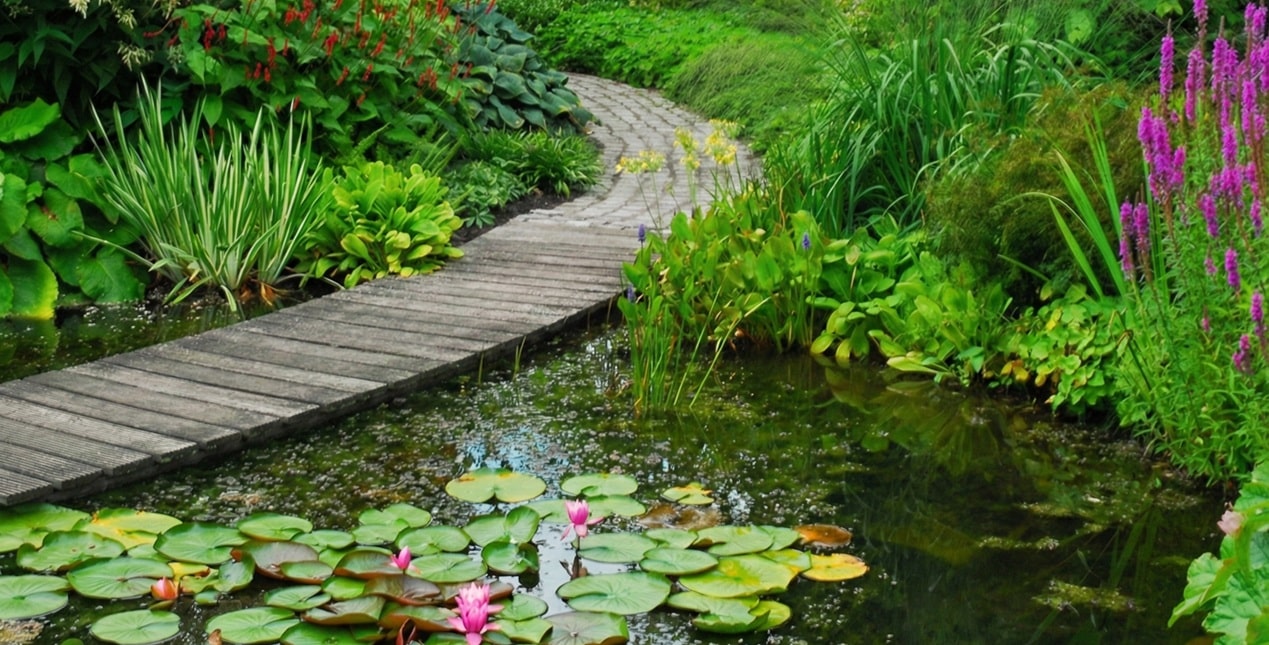
“Beautiful, robust Aquatic plants really help with natural filtration. The water has visibly become clearer.”
— Mireille Ferreiro
— Heinz Fischer
Frequently Asked Questions About Aquatic plants
Marsh plants grow in the shallow edge zone (0 to 30 cm), while Aquatic plants can grow Aquatic plants (10 to 80 cm). Aquatic plants the spaces between the marsh plants and the bottom, ensuring that your pond is fully planted. Both are essential for maintaining a natural balance.
In addition to 20 marsh plants per 1,000 liters, you’ll also need 20 Aquatic plants 1,000 liters. This may seem like a lot, but it’s the only way to create a fully natural balance. Some zones overlap, so in practice you’ll often use mixes that contain both types.
Aquatic plants at various depths: from 10 cm (overlapping with marsh plants) to 80 cm deep. Check the ideal depth for each species. Many Aquatic plants adaptable and grow well at multiple depths. Plant them in baskets or directly in the substrate.
The best time to plant is from March to September, but you can plant them year-round. They are 100% hardy. It’s best to plant them early in the season so they have the whole summer to grow and can start absorbing nutrients right away.
Keep it minimal! Leave the foliage in place during the fall to protect the plant from winter damage. In the spring (March–April), trim away the old foliage. You can thin out some varieties if they grow too densely, but they usually regulate their own growth. The more biomass, the better the water quality.
Absolutely! Fish benefit greatly from Aquatic plants they provide shelter from herons, serve as a natural food source (insects), and help keep the water healthy. Koi and grass carp may nibble on them, but the benefits far outweigh a little bit of damage.