

Pond edging
Pond edging
Of course, you can finish any pond edge.
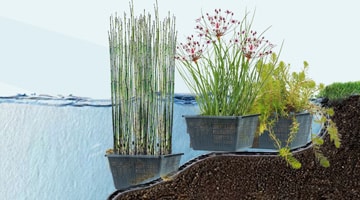
Sometimes you plant directly along the edge. In other ponds, you can easily create planting zones using stackable pond crates or a small retaining wall along sloped banks to keep the substrate and plants in place.
With these solutions, you can turn any pond into a stable and natural system that helps keep the water clear.
What kind of pond do you have?
Pond without shallow areas
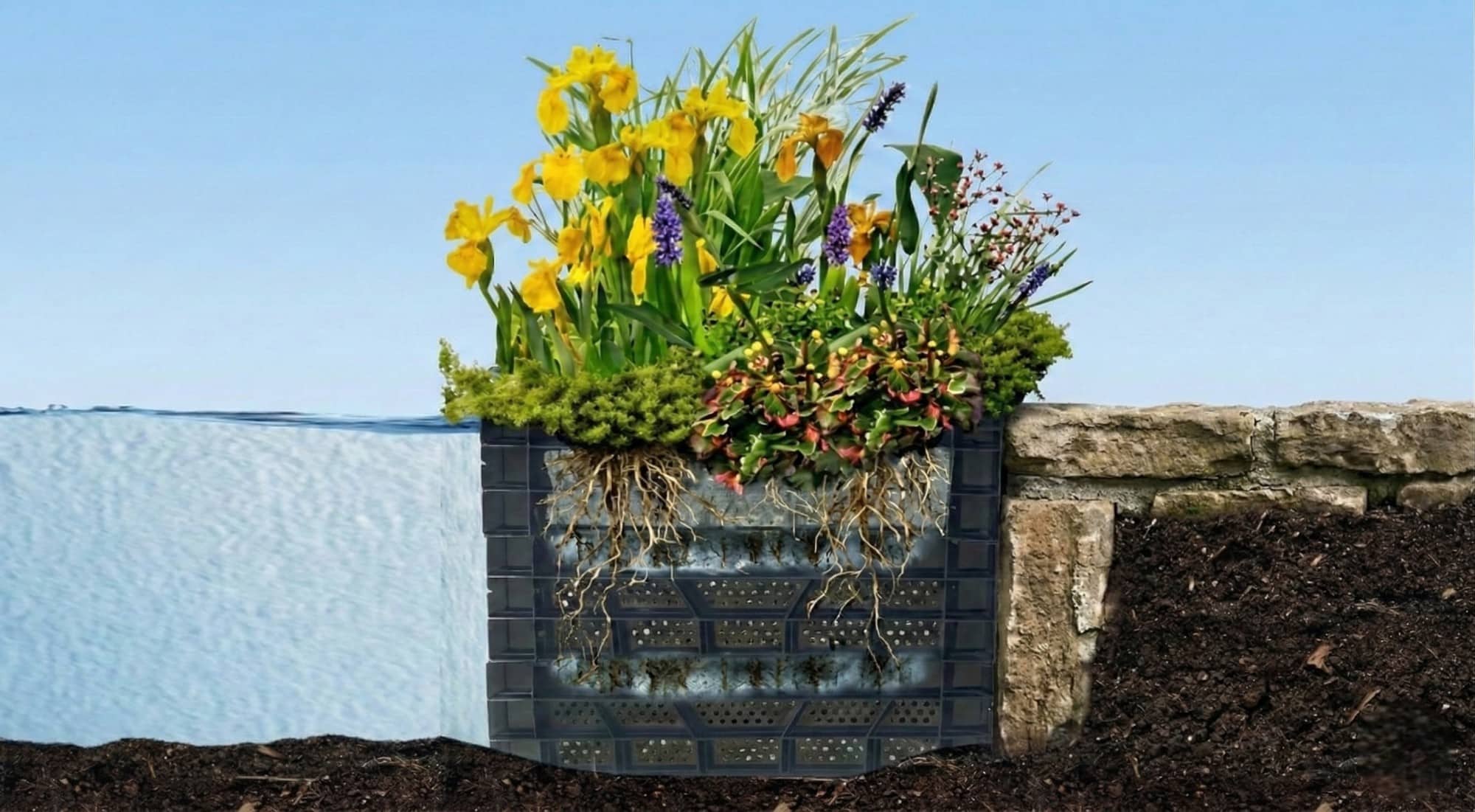
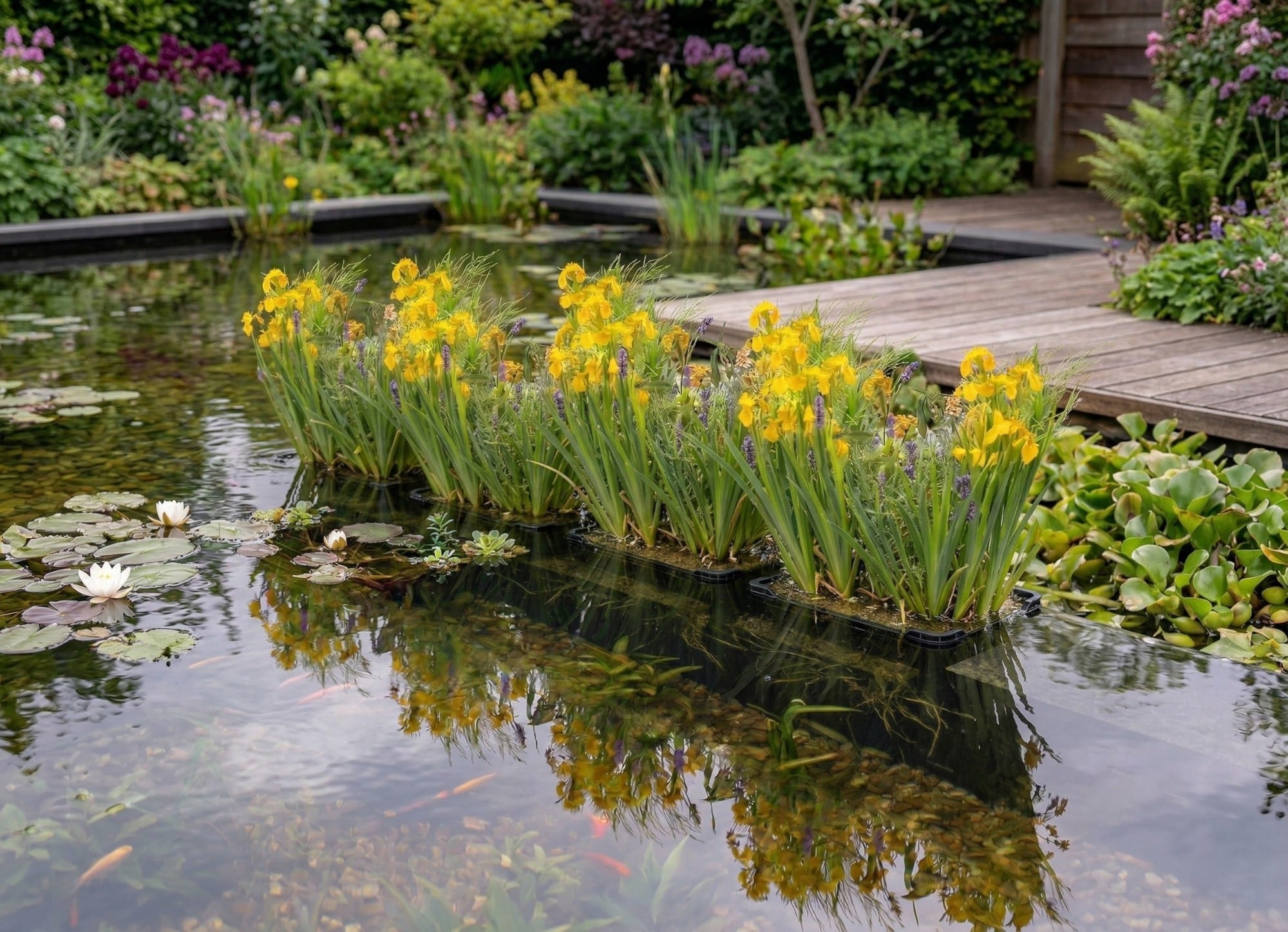
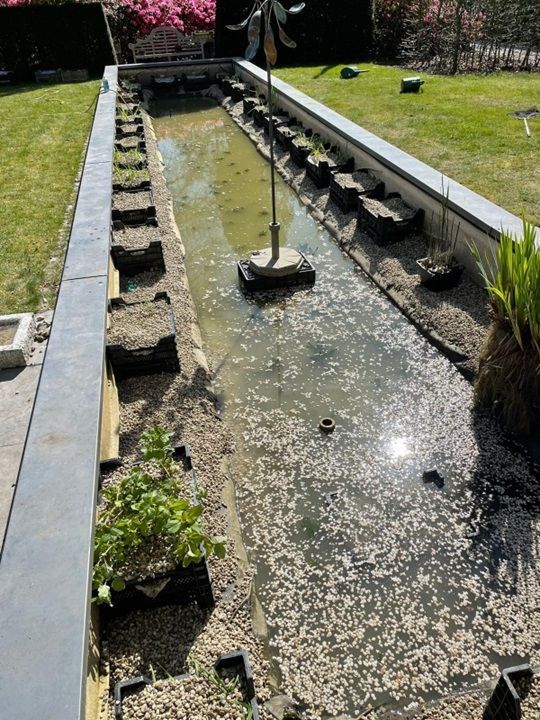
If your pond doesn't have any shallow areas or a marshy edge, but does have a flat bottom, you can still easily create a natural edge using biofilter towers.
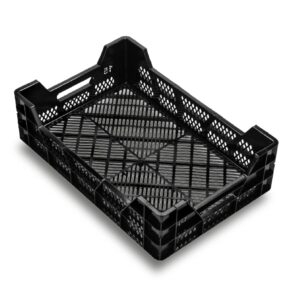
You can build these towers using stackable pond crates measuring 60 × 40 × 16 cm.
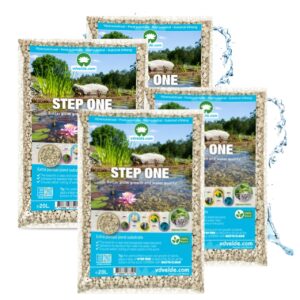
Stack the crates on top of each other to the desired height and fill them with STEP ONE Pond substrate for extra stability and a strong foundation for plants.
In the top crate, which is positioned about 10 cm below the water's surface, place about 6 plant baskets containing marsh plants.
This creates a sturdy border that:
- Filters nutrients from the water
- Adds extra oxygen to the water
- Helps reduce algae
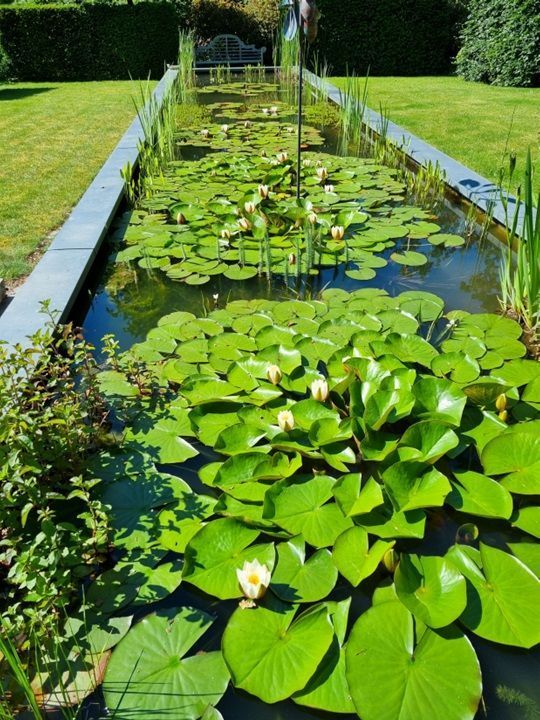
The result is a stable, natural pond that stays clear and becomes more balanced.
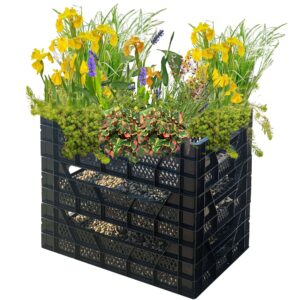
Biofilter
• Plant filter tower purifies 1,000 L of water
• 24 water-purifying plants
• 60x40x48 cm
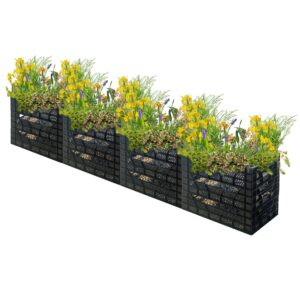
4-Tower Biofilter
• Plant filter purifies 4,000 L of water
• 96 water-purifying plants
• 4 units, 60x40x48 cm
STEP ONE Pond substrate
• Heavy-duty quality: maximum filtration
• Extra porous for optimal plant growth
• 80L of substrate covers 1m² with a 10 cm layer ↥
Deep pond with sloping edges
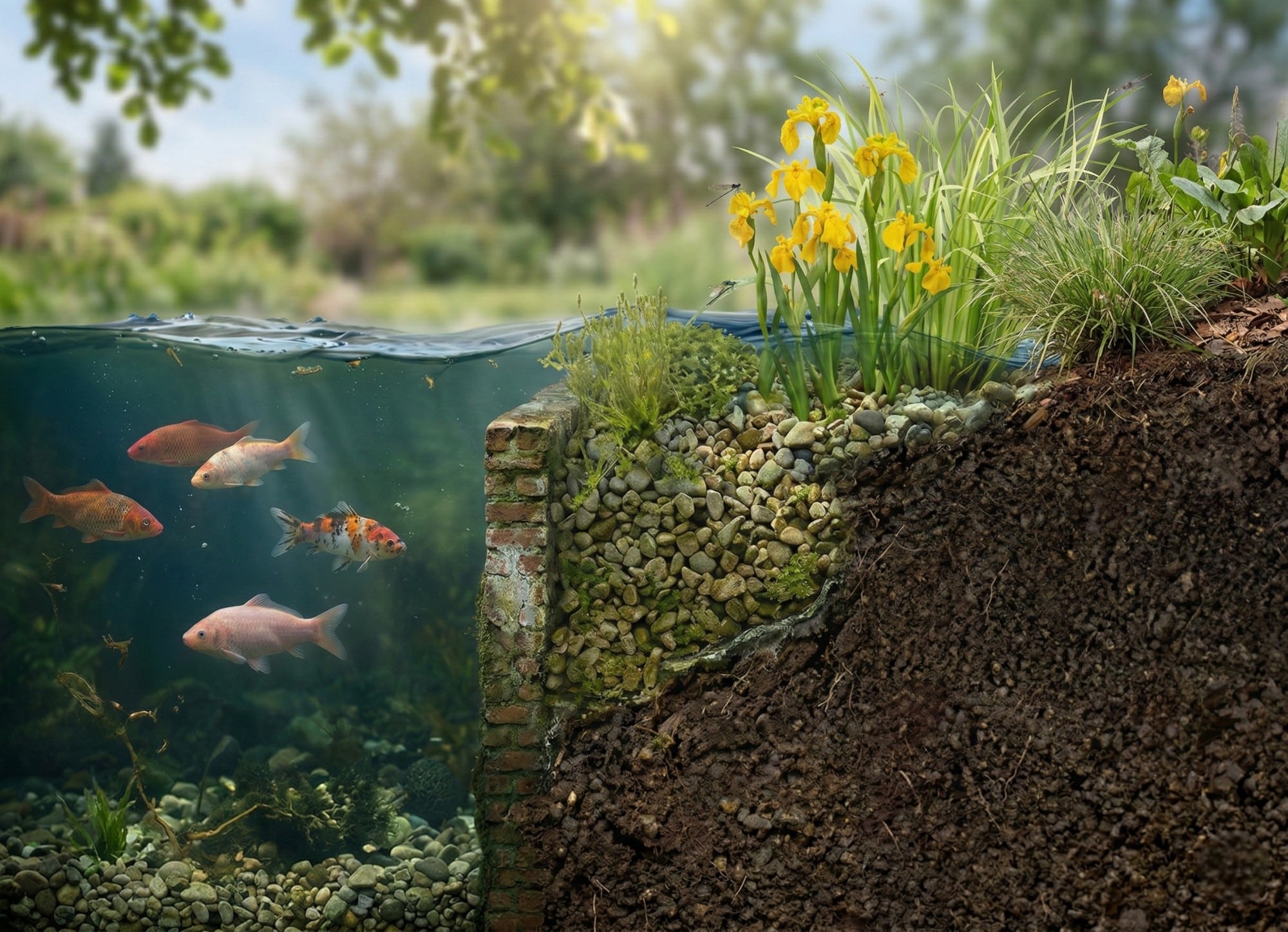
Problem: Substrate sinks to the center of the pond
Substrate does not stay in place on sloped walls. It sinks to the bottom, causing creating a thick layer in the center and plants cannot be planted at the correct depth.
Why crates don't work here
In this situation, you not use stackable plant crates, because the ground is not flat and too narrow. As a result, the crates won’t stay stable.
Solution: Create a retaining wall along the edge
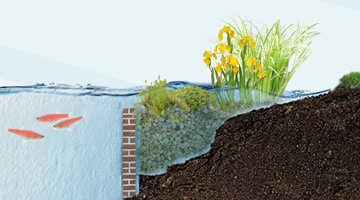
Create a retaining wall along the sloped wall barrier so that the substrate does not slide down. You can do this, for example, with bricks or wooden planks. Place this barrier approximately 10 cm below the water surface.
Placing the substrate and plants
Fill the space between the barrier and the sloped wall with Pond substrate about 10 cm below the water surface.
Here you can then plant tall filter plants and low-growing oxygenating plants . This keeps the edges stable, and the plants help keep the water clear and prevent algae.
Complete solution:
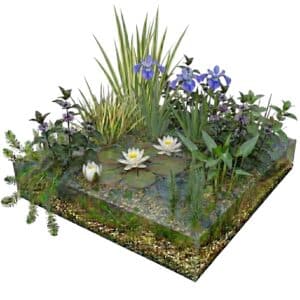
Complete Aquatic Plant Filter Kit (2–3 m²)
• Makes the wetland filter maintenance-free
• 70 plants + supplies
• Installation depth: 1–20 cm
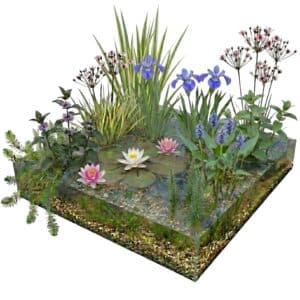
Complete Aquatic Plant Filter Kit (4–7 m²)
• Makes the wetland filter maintenance-free
• 132 plants + supplies
• Depth: 1–20 cm
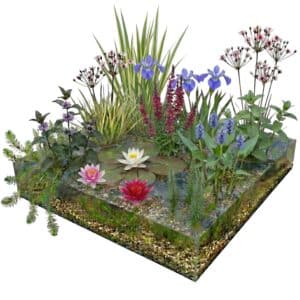
Complete Aquatic Plant Filter Kit for 8–12 m²
• Makes the marsh filter maintenance-free
• 219 plants + supplies
• Depth: 1 to 20 cm
Plants only (native):
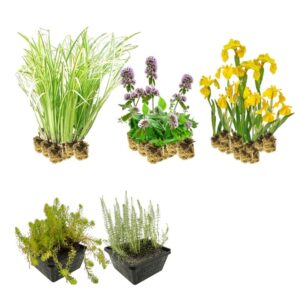
Native Filter Plant Package (2–3 m²)
• 69 plants for 2–3 m²
• Water purification and algae control
• Depth: 1–20 cm
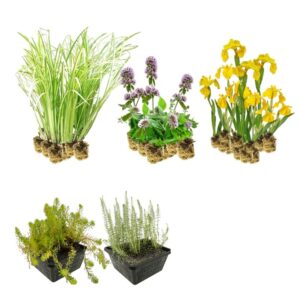
Native Filter Plant Package (4–7 m²)
• 175 plants for 4–7 m²
• Water purification and algae control
• Depth: 1–20 cm
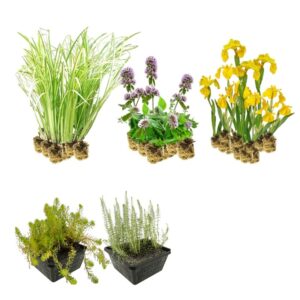
Native Filter Plant Package (8–12 m²)
• 264 plants for 8–12 m²
• Water purification and algae control
• Depth: 1–20 cm
STEP ONE Pond substrate
• Heavy-duty quality: maximum filtration
• Extra porous for optimal plant growth
• 80L of substrate covers 1m² with a 10 cm layer ↥
Preformed Pond tub
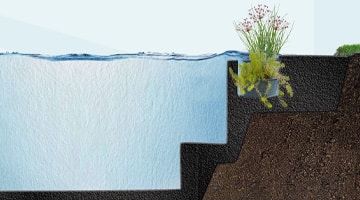
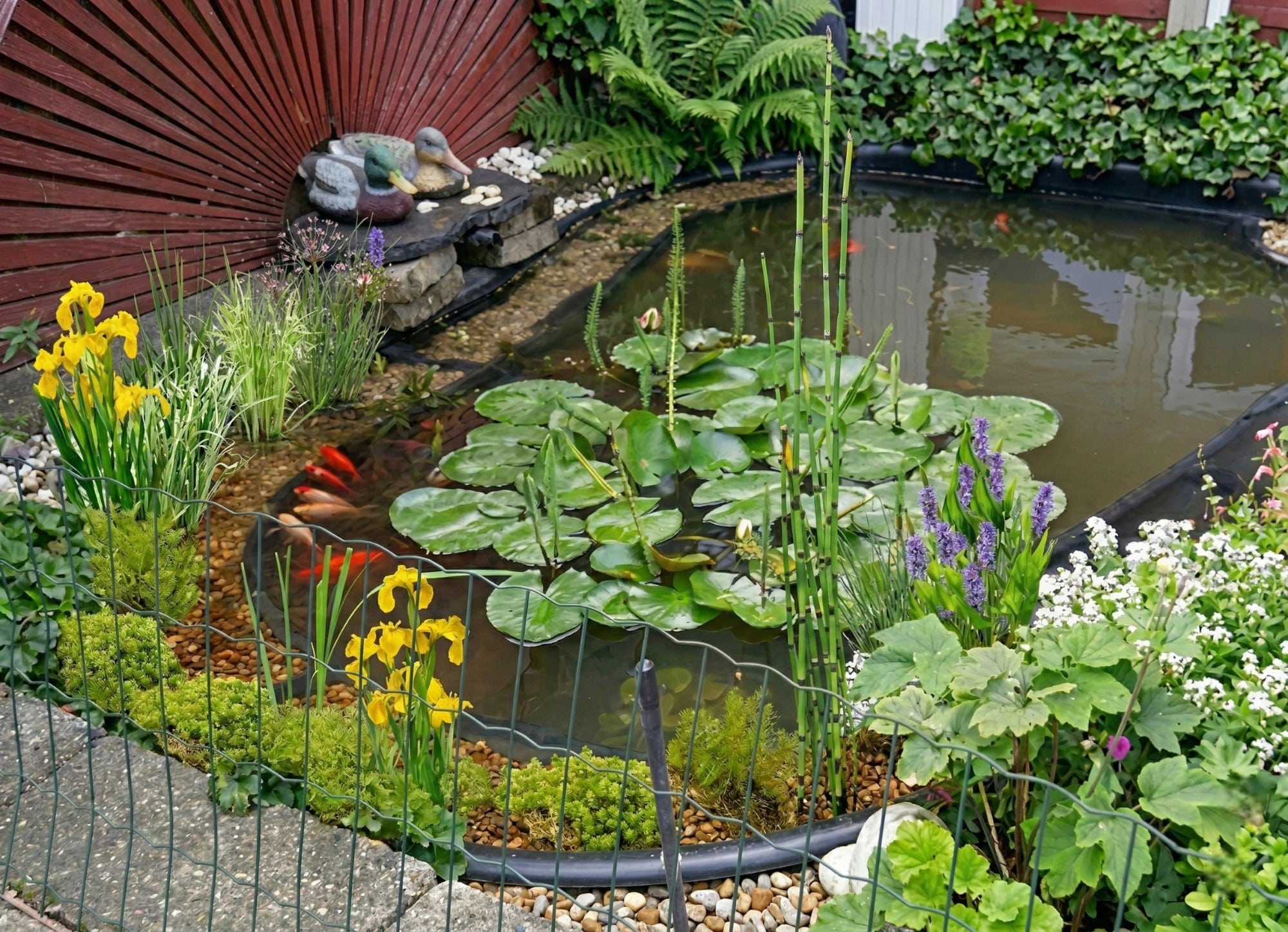
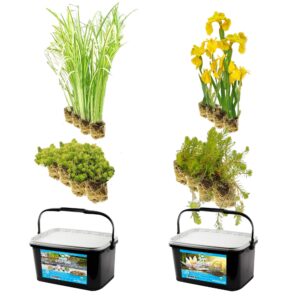
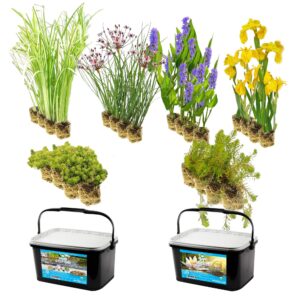
Do you have a pre-formed Pond tub, then it’s best to use our Pond tub Kits. These have been specially designed for the planting zones along the edges of a pre-formed pond.
In the planting beds along the edge, add a mixture of Pond clay Pond substrate . This creates a stable substrate in which you can loose plug plants. The roots will take hold in this mixture and continue to grow on their own.
The plants cover the black edges of the Pond tub, causing them to heat up less quickly in the sun. This helps to reduce algae growth. At the same time, the plants provide extra oxygen and natural filtration, keeping the water clear and healthy.
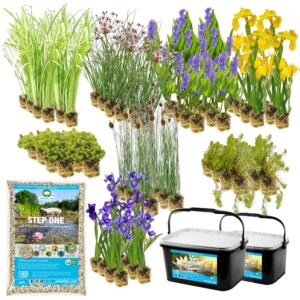
Pond with shallow areas
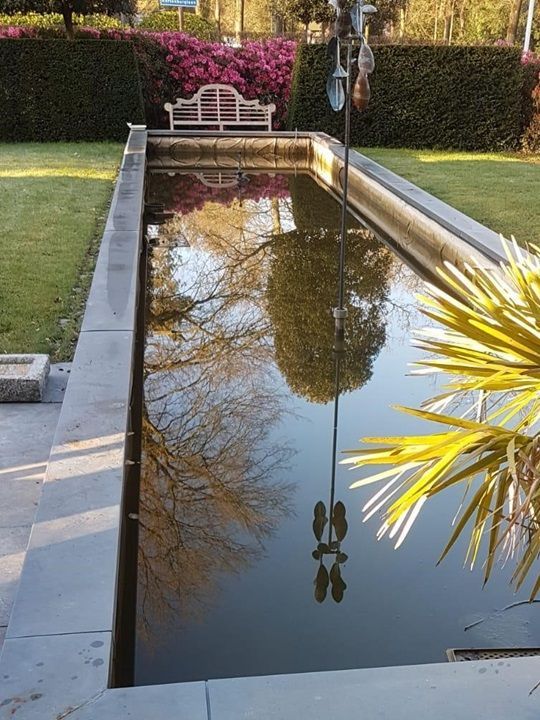
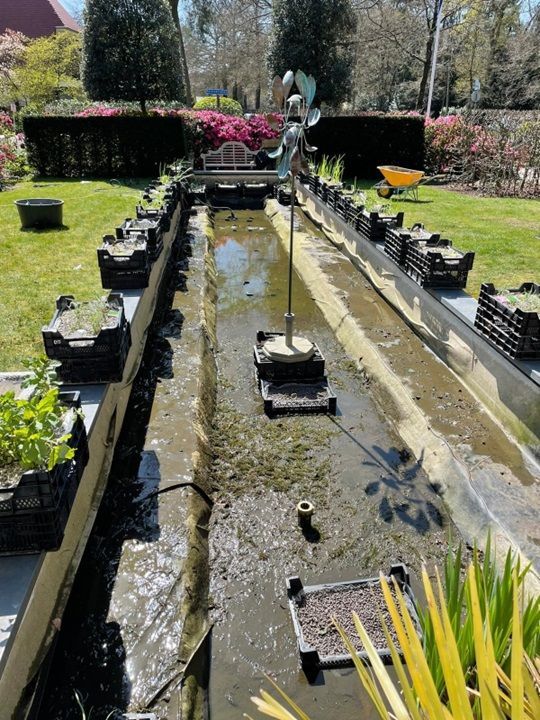
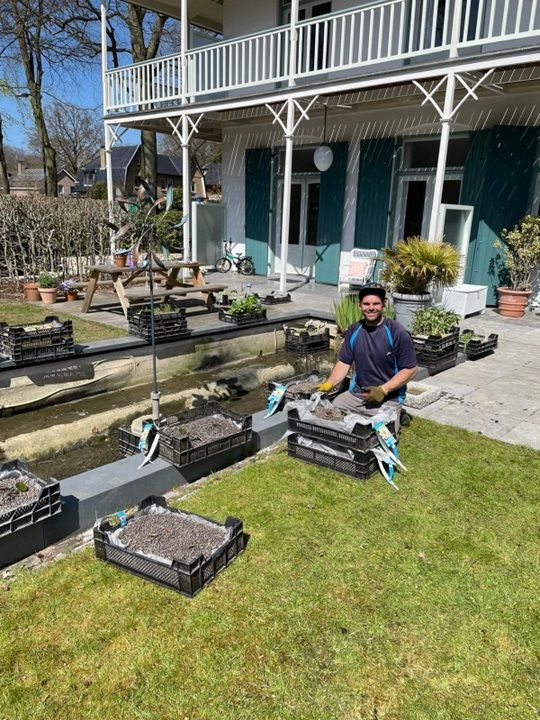
Aquatic plants (Set of 4)
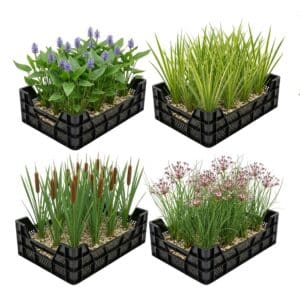
• 15 plants per crate (60x40x16 cm)
• Mature height: 120 cm
• Planting depth: 1–20 cm
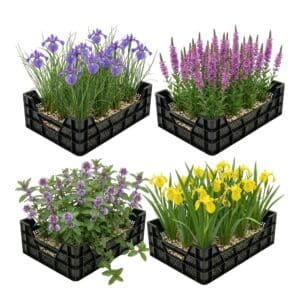
Marsh Plants Pond Baskets (Set of 4)
• 15 plants per crate (60x40x16 cm)
• Mature height: 80 cm
• Planting depth: 1–10 cm
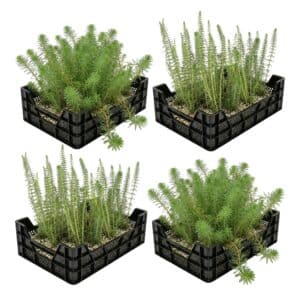
Oxygenating Plants Pond Baskets (Set of 4)
• 12 plants per crate (60x40x16 cm)
• Mature height: 30 cm
• Planting depth: 1 to 20 cm
STEP ONE Pond substrate
• Heavy-duty quality: maximum filtration
• Extra porous for optimal plant growth
• 80L of substrate covers 1m² with a 10 cm layer ↥
How to Set Up a Pond or Plant Filter the Smart Way
Simon van der Velde

Would you like some more helpful tips for a healthy and clear pond?
In *Simons Pond book you Pond book spot common mistakes and discover exactly how to properly construct and plant your pond. It includes a simple planting plan that you can use right away.
Save at least €200 on a small pond and thousands of euros on a large pond.