

Preparing Your Pond for Winter
Get your pond ready for winter
Start the winter off on the right foot with healthy water and clean soil
Why Fall Is the Crucial Period
Prevent problems in the spring by properly preparing your pond now. Healthy pond water and a clean bottom ensure that your pond enters the winter in good condition, which helps prevent problems in the spring
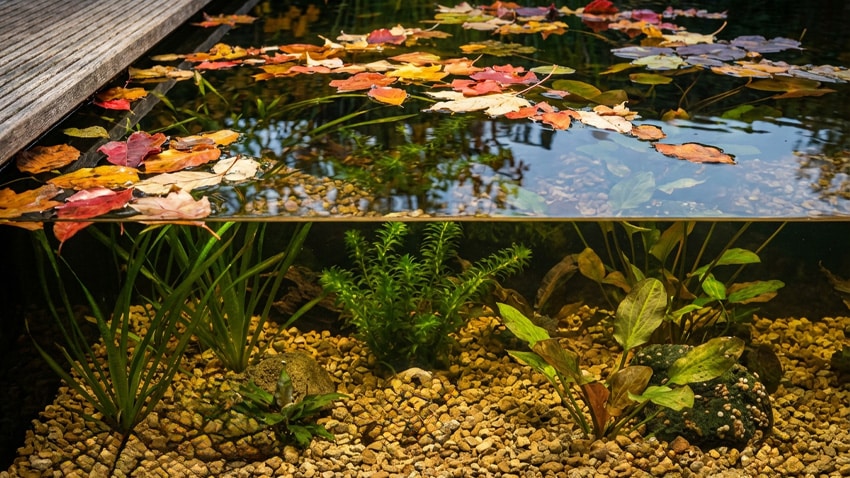
Prevent sludge buildup
In the fall, leaves fall into the pond and plants die off. Clean the bottom to prevent sludge from building up and to reduce the nutrients available to algae.
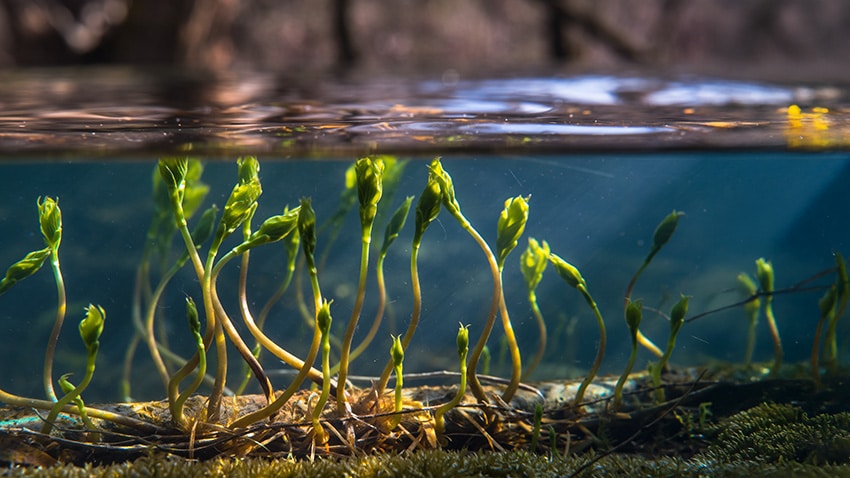
A clean soil heading into winter
By breaking down sludge and debris, your pond will enter the winter clean and stable, which helps prevent problems in the spring.
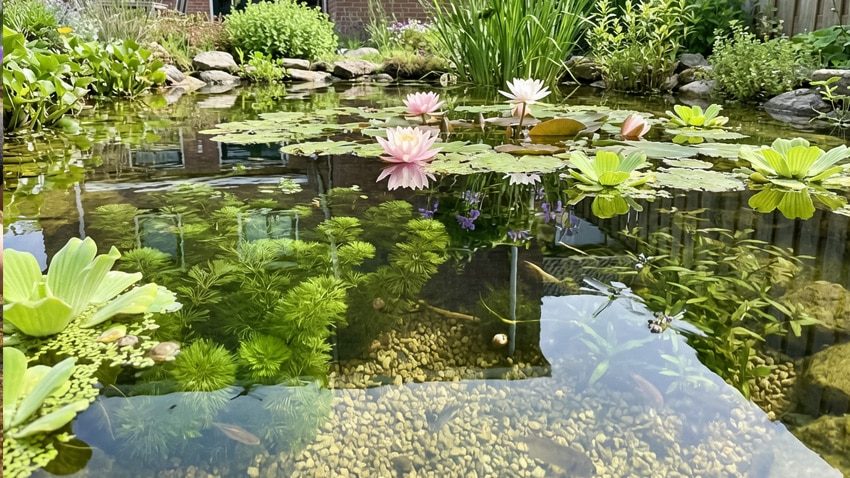
Clear water in the spring
Adding bacteria helps maintain the biological balance. This way, you can start the new season without cloudy water or algae.
How to Prepare Your Pond for Winter in 4 Steps
Follow these steps for a worry-free winter and a flying start to spring
Thoroughly clean the bottom of the pond
Remove leaves, dead plant matter, and sludge from the bottom. Use INSTA CLEAN to break down organic material. A clean bottom means no food for algae in the winter.
Why this is important: Organic matter breaks down slowly and consumes oxygen. In the winter, when there is little oxygen production, this can be dangerous for your fish.
Pond bacteria
Apply BACTA CLEAR the fall dosage. These bacteria remain active even at lower temperatures and break down waste products that would otherwise cause problems.
Pro tip: Bacteria need time to establish themselves. So be sure to do this before the first frost, preferably when the water temperature is above 10°C.
Pruning and Plant Care
Trim marsh plants to just above the waterline and remove dead leaves from Water lilies. Leave oxygenating plants alone—they continue to grow throughout the winter and produce oxygen.
Note: Leave the reeds and Typha . They help maintain air circulation under the ice, which is essential for fish.
Check the equipment and nets
Install a pond net to prevent leaves from falling into the pond. Check whether your pump and filter are winter-proof (some need to be brought indoors). Consider using a pond heater or a floating ice-preventer during severe frost.
Fish: Stop feeding when the temperature drops below 8°C. In case of frost: check daily to make sure there is an air hole in the ice to allow for gas exchange.
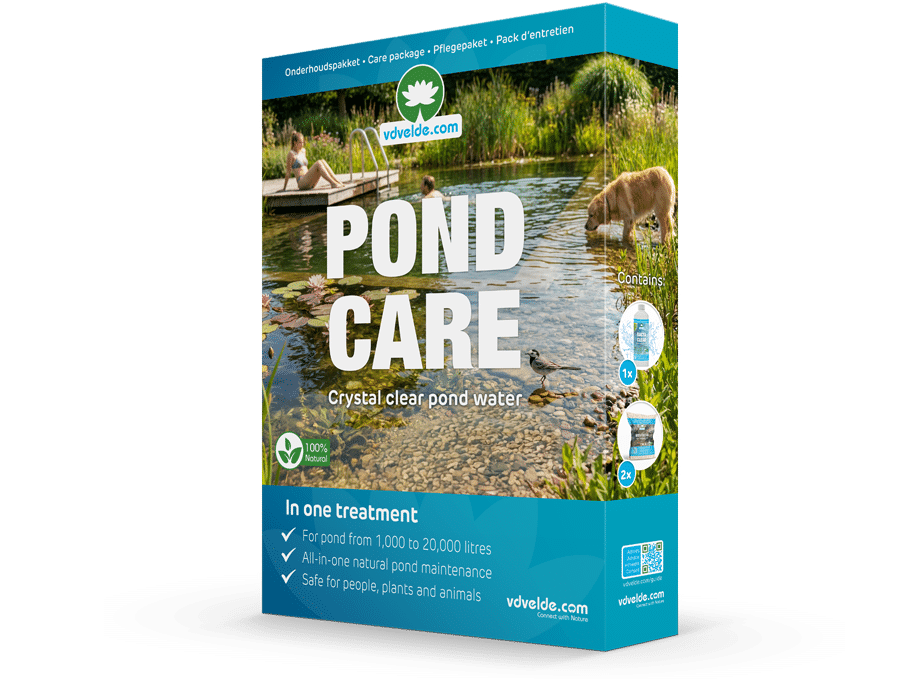
All-in-one: POND CARE maintenance kit
How it works:
When should it be used?
You should use this treatment twice a year: in the spring and in the fall. If you notice algae, cloudy water, or a lot of sludge, you can repeat the treatment more often.
Not sure if your pond is set up properly?
Then start with the basics
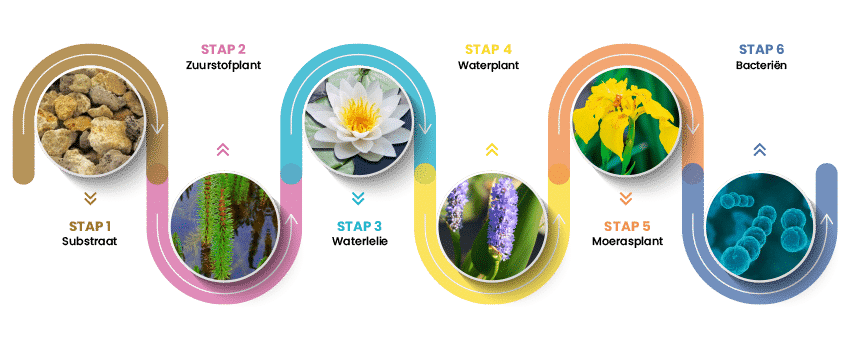
Follow our Clear Water Plan and discover, step by step, what your pond is missing in terms of oxygenating plants, marsh plants, or substrate. A pond that becomes unbalanced over the course of the year is usually not fully or properly set up.
Frequently Asked Questions About Winterizing Your Pond
Start in September or October, before the first frost. The ideal water temperature is between 10–15°C. At that temperature, the bacteria are still active and can establish themselves well.
That depends on the type. Many modern filters are flow-through models, but always check the manual. A flow-through filter keeps the water moving and prevents the entire pond from freezing over.
Then you'll start the spring at a disadvantage: a lot of sludge, murky water, possibly sick fish, and algae that grow faster than your plants. You'll have to clean things up first before you can enjoy it.
Choose the package that best suits the size of your pond:
1,000–20,000 liters
20,000–40,000 liters
40,000–60,000 liters
80,000–100,000 liters
Not sure? It's better to choose a slightly higher dose.
Wait to start up the system until the risk of frost has passed and the water temperature remains stable above 10°C. Bacteria are not active at low temperatures.
POND CARE helps keep the water clear, but to keep it that way, your pond needs to be properly set up.
So be sure to follow the Clear Water Plan, which includes plenty of plants and substrate.
After that, use POND CARE twice a year (in the spring and fall) for maintenance.
What others are saying
“After using the POND CARE kit, my pond water was crystal clear within a week. I highly recommend it for spring!”
— Jan from Groningen
“Finally, no more green water in April. The Clear Water Plan really helped me get things set up right.”
— Linda from Utrecht
“I got some great advice on oxygenating plants. My pond has never been in better shape than it is this year!”