

Displaying25 of the 25 results
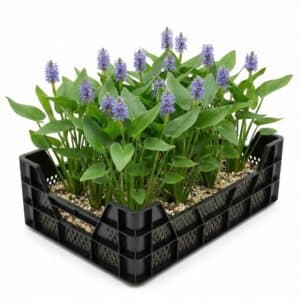
Water Parsley Pond Basket
• 15 plants per crate (60x40x16 cm)
• Mature height: 80 cm
• Planting depth: 1 to 20 cm
Displaying25 of the 25 results
• 15 plants per crate (60x40x16 cm)
• Mature height: 80 cm
• Planting depth: 1 to 20 cm
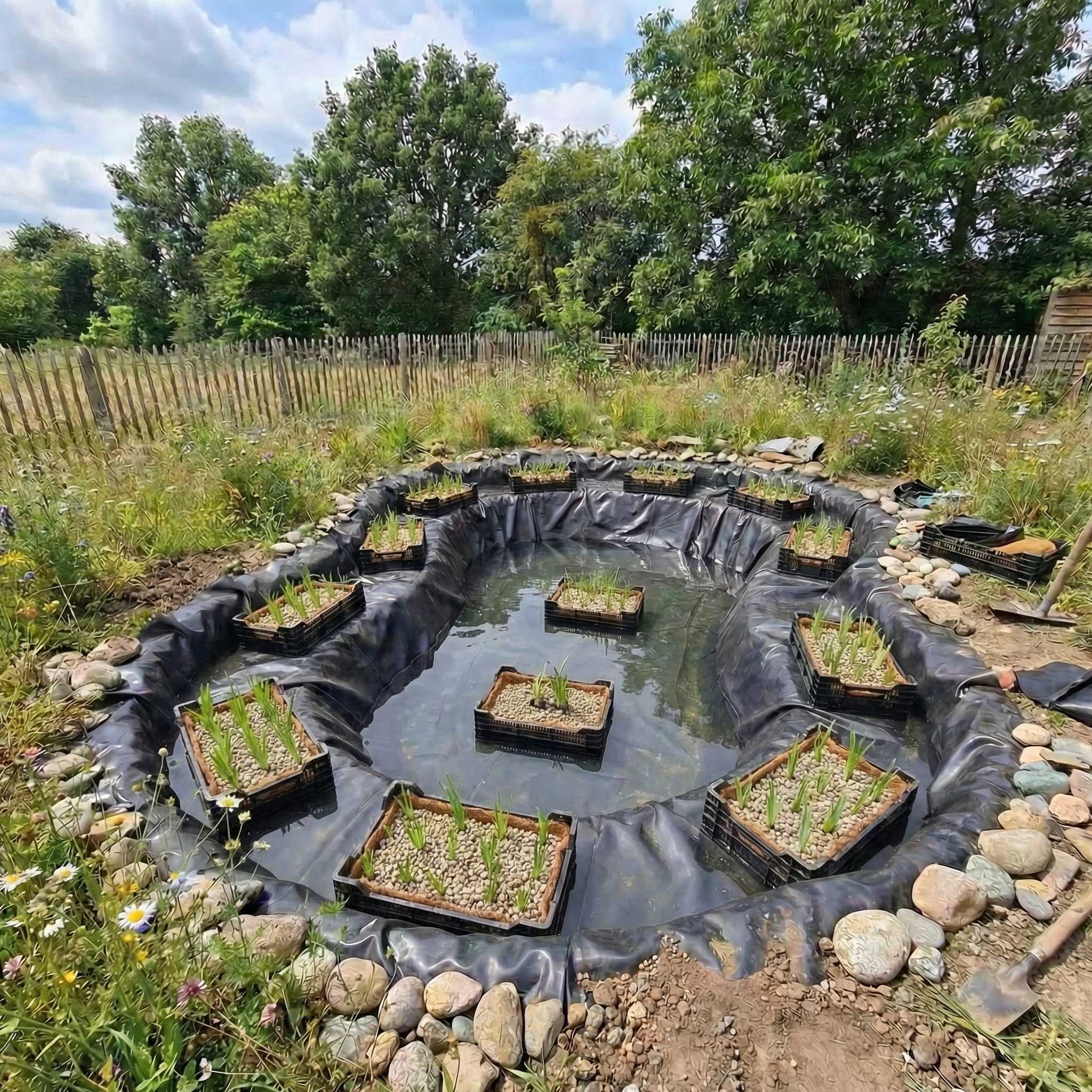
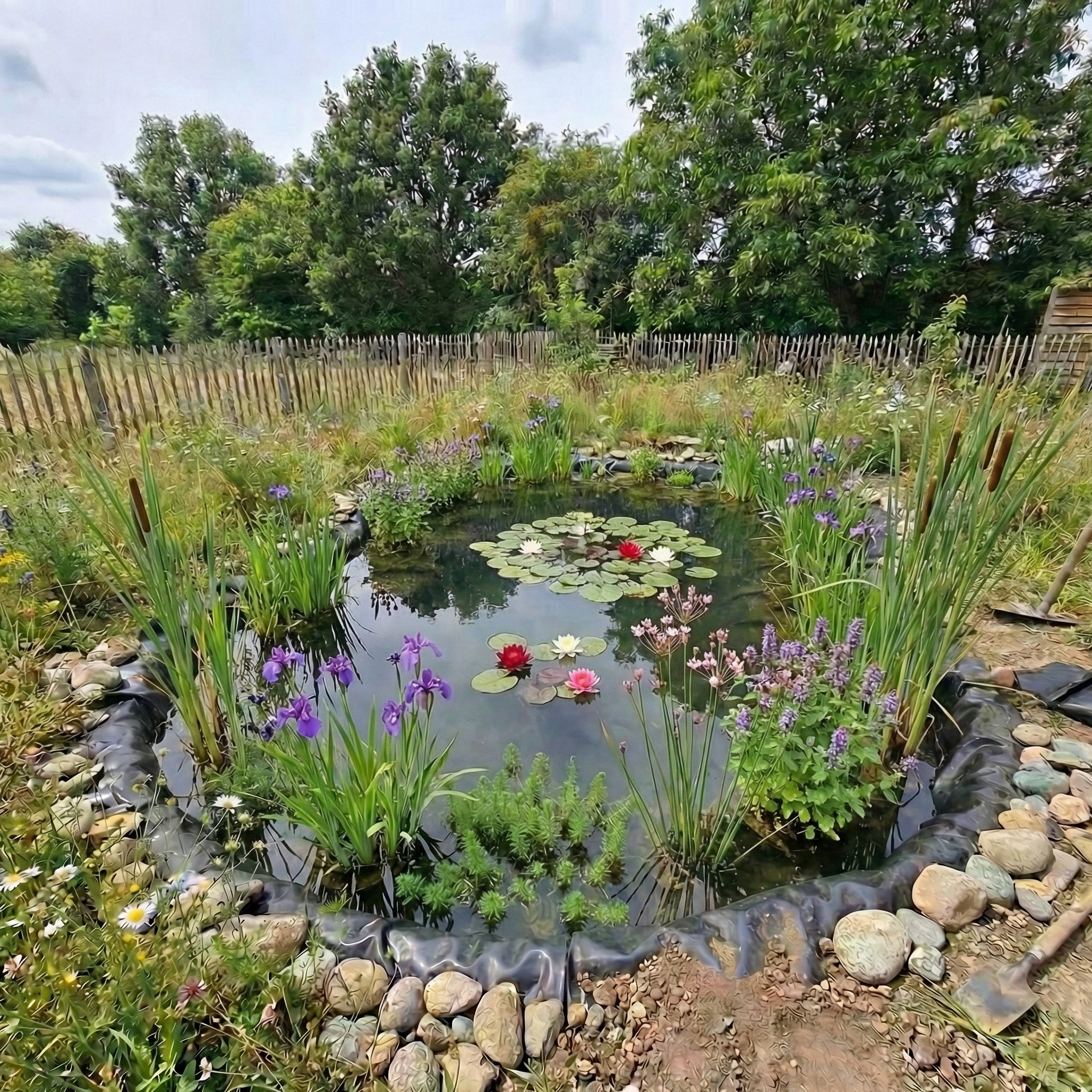
Drag the line to see the final results.
Pond baskets are used to plant pond plants in an organized and controlled manner. They make it possible to quickly plant large areas while maintaining complete control over placement and depth. This is essential for deep ponds or ponds without natural zones.
By stacking pond crates, you can determine the optimal planting depth yourself. Each additional crate raises the plants by 16 cm, ensuring they are always at the right height to grow well and filter effectively.
In larger ponds, pond crates are particularly practical. You can plant a large area quickly, neatly, and without loose baskets. A single pond crate is ready in just a few minutes: place a coconut fiber mat at the bottom, add 20 liters of Pond substrate and 16 plants, and the crate is ready to go straight into the pond.
The Pond substrate a loose and stable substrate in which plants can take root firmly. As a result, they establish themselves more quickly and immediately begin absorbing nutrients from the water.
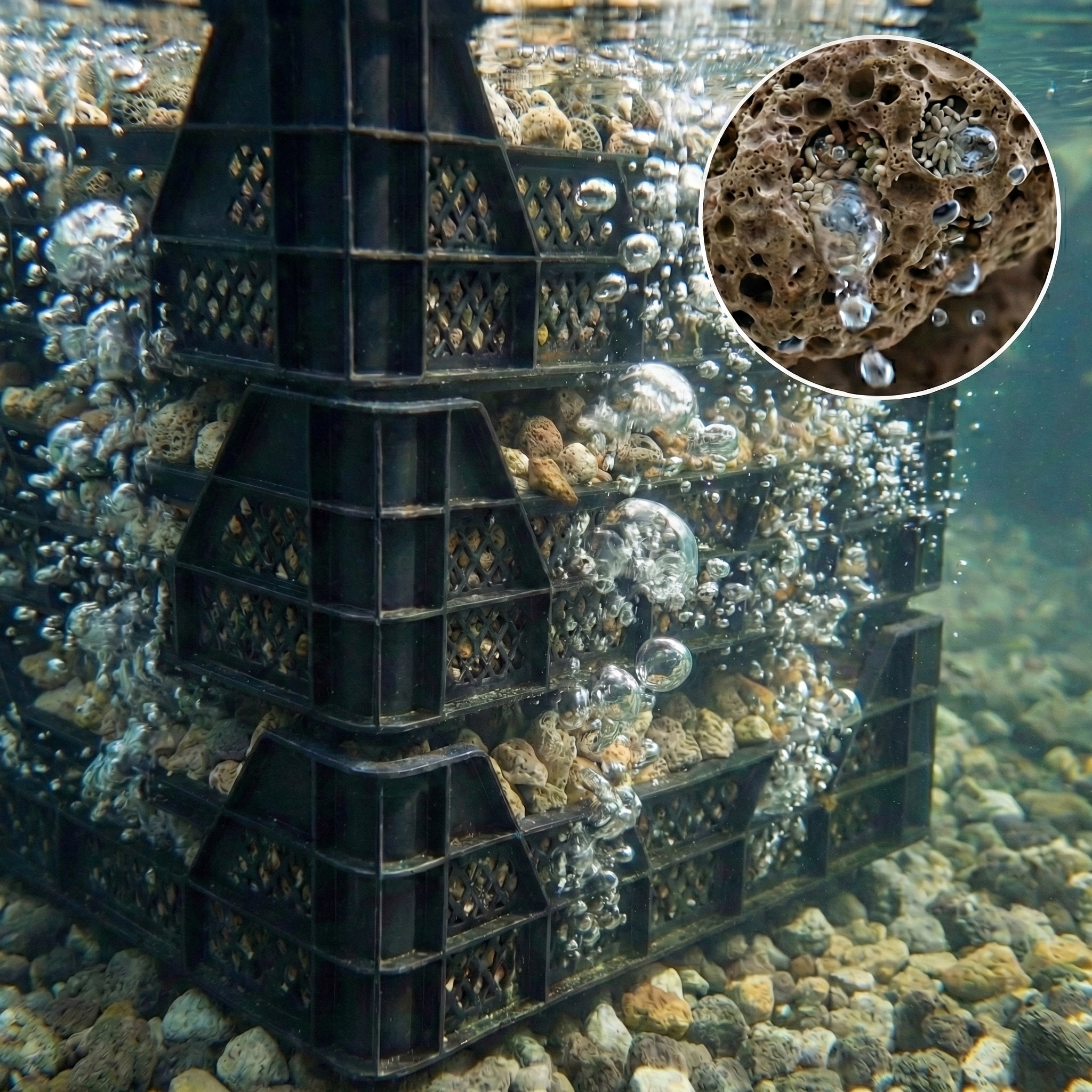
If you have a deep pond, simply stack the pond crates on top of each other. Plant only the top crate and fill the crates below it completely with Pond substrate.
This creates a vertical plant filter that allows water to flow from the bottom to the top, while the substrate and plants continuously absorb nutrients and pollutants from the water. This makes pond cages highly effective in deep ponds where plants would normally be too deep.
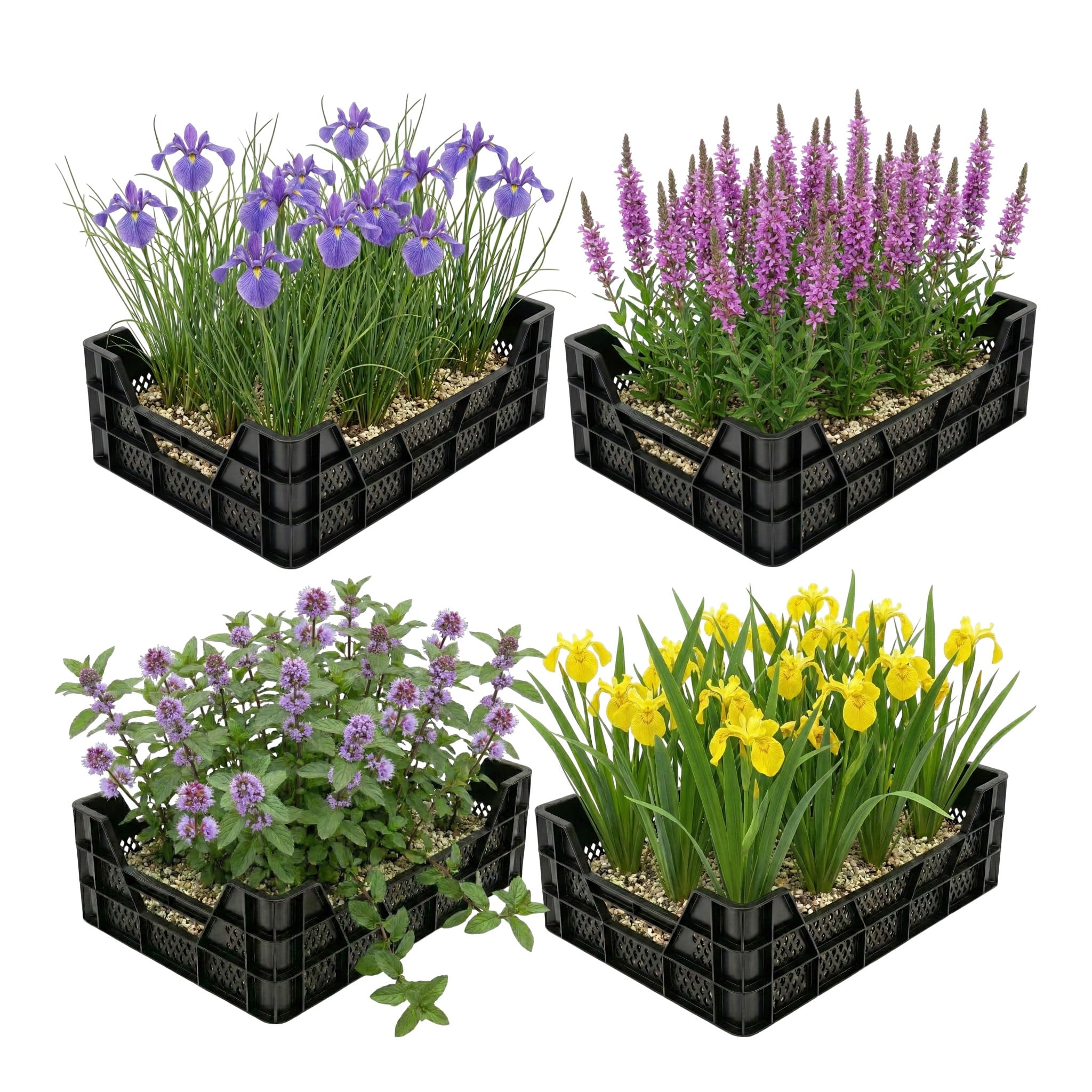
Marsh plants are the most powerful natural Water purifiers. They absorb large amounts of nutrients, thereby effectively reducing algae growth.
Suitable for plant filters, pond edges, and shallow areas. Essential for maintaining a stable pond ecosystem.
Primary function: water treatment and nutrient removal
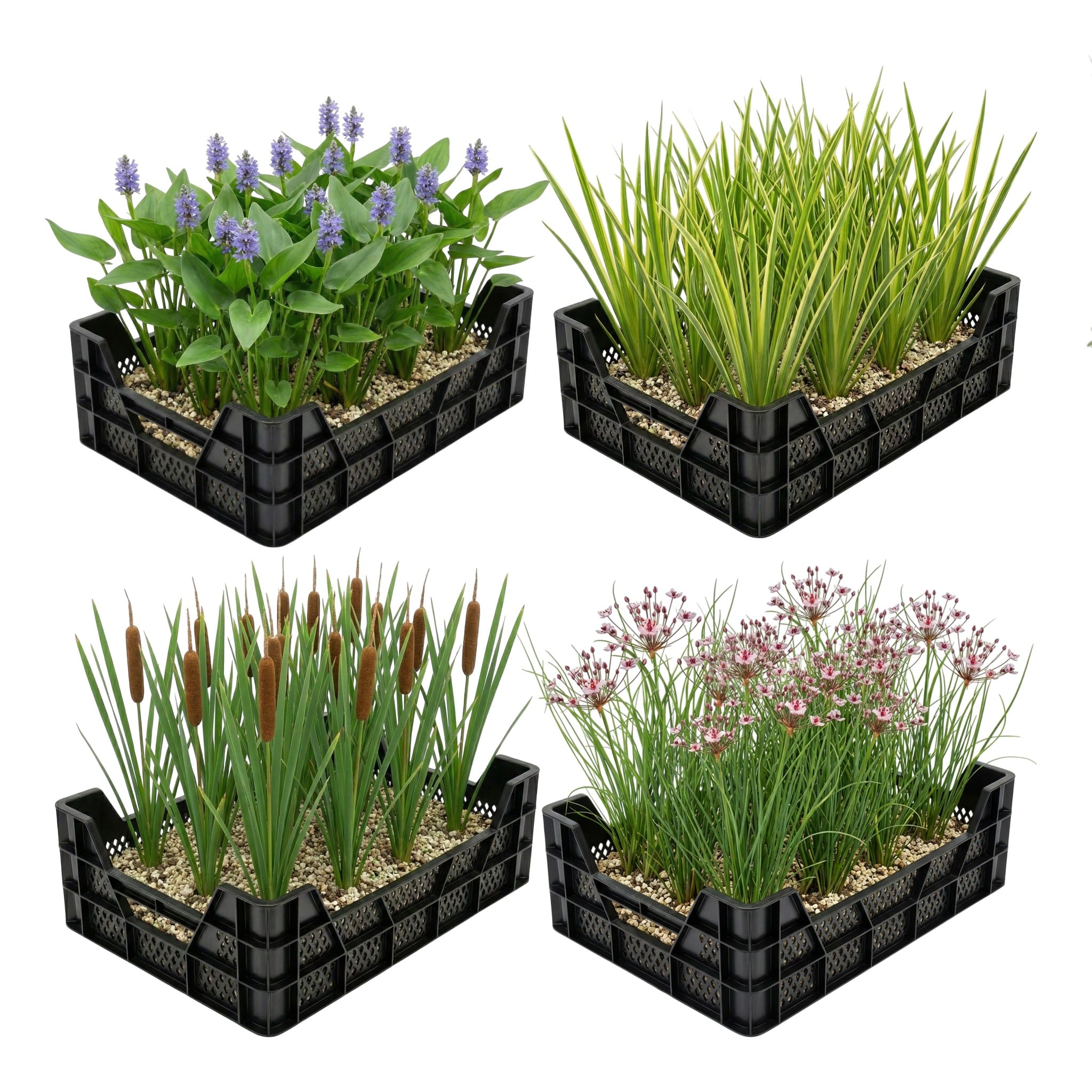
Aquatic plants the biological balance in the water itself. They absorb dissolved nutrients and support the ecosystem in the middle zone of the pond.
Ideal for ponds where clear water is a priority.
Primary function: natural filtration and stability
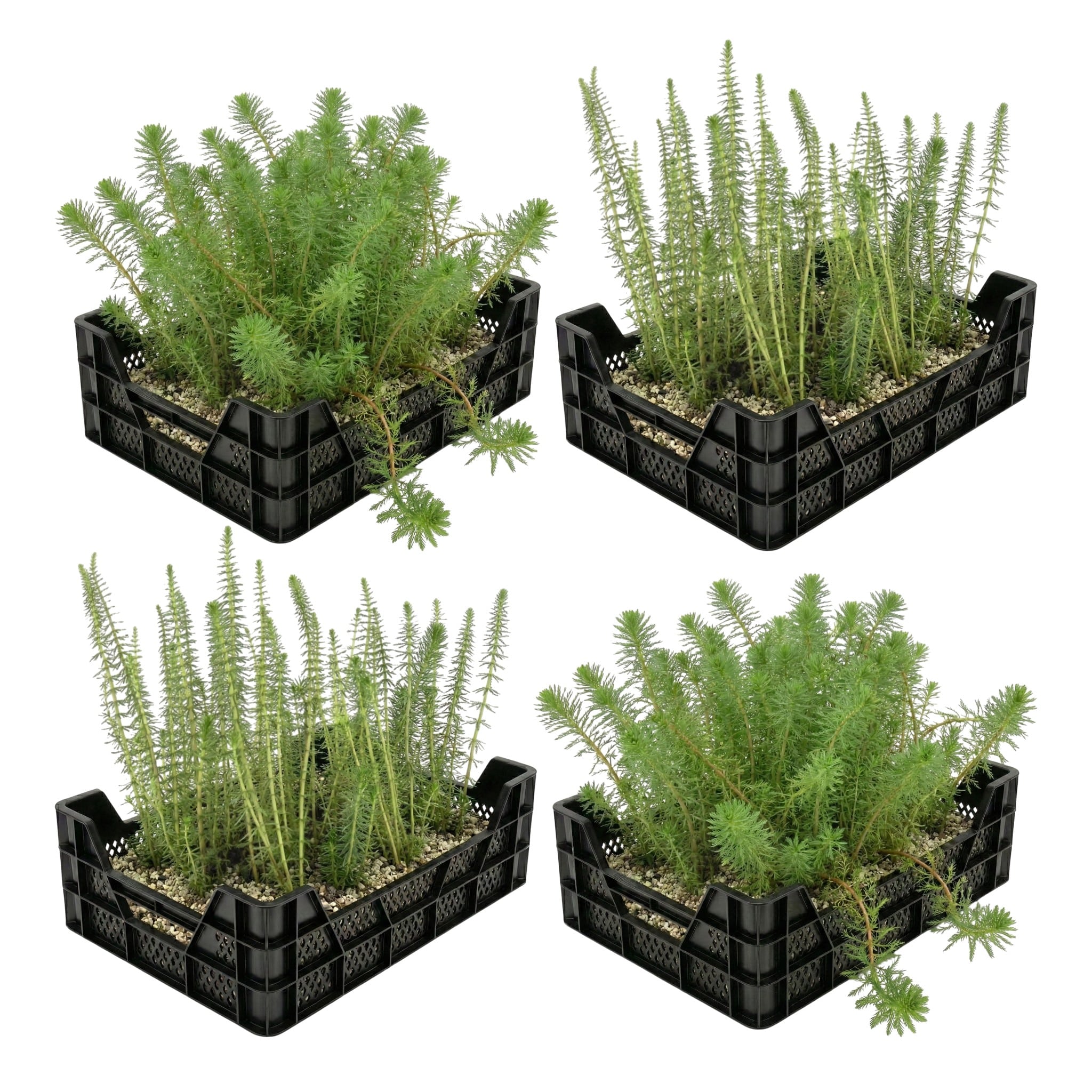
Oxygenating plants work directly in the water. They produce oxygen, compete with algae, and help address issues such as floating algae or unstable water.
Essential for new ponds or ponds that are out of balance.
Primary function: oxygen production and algae control
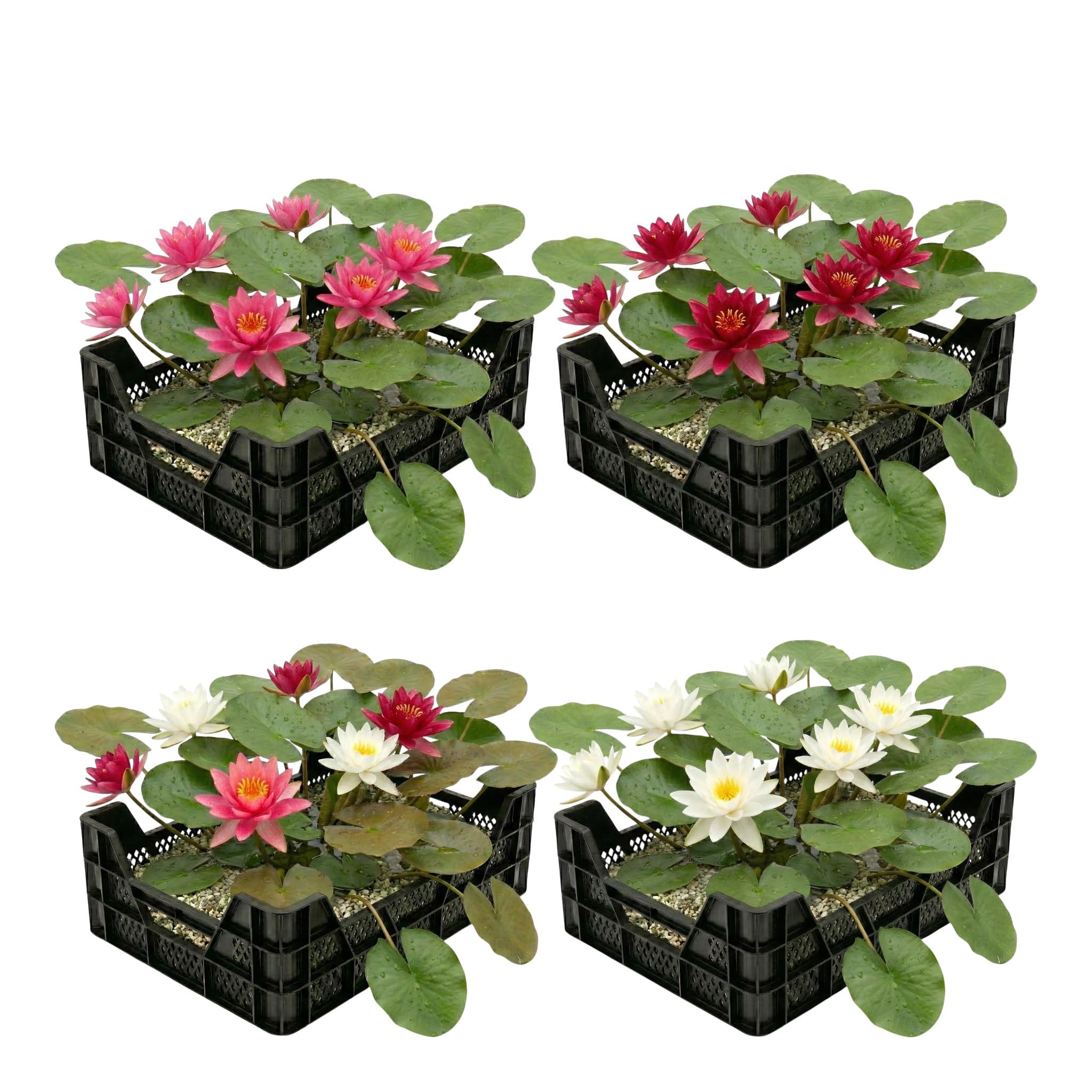
Water lilies shade and a sense of calm. By filtering sunlight, they limit algae growth and lower the water temperature.
Suitable for open water surfaces.
Primary function: shade and temperature balance
Sets of four pond crates are also available for each plant type.
These sets always consist of a single plant group, such as four marsh plant crates or four oxygenating plant crates. Mixed types are not combined.
Why this is important:
Plants within the same group enhance each other’s effects. This prevents competition and allows you to get the most out of every area of the pond.
A biologically balanced pond requires at least four plant groups:
marsh plants, Aquatic plants, oxygenating plants, and Water lilies.
Each group plays a different role. Only when they work together can a stable, clear, and low-maintenance pond system be created.