

Caring for an air plant
Caring for Tillandsia: 10 Expert Tips for Caring for Your Tillandsia
Tillandsia, also known as air plants, grow differently than most other houseplants, so they can be confusing for beginners. They are actually very hardy and require much less care than other houseplants.
1. Watering
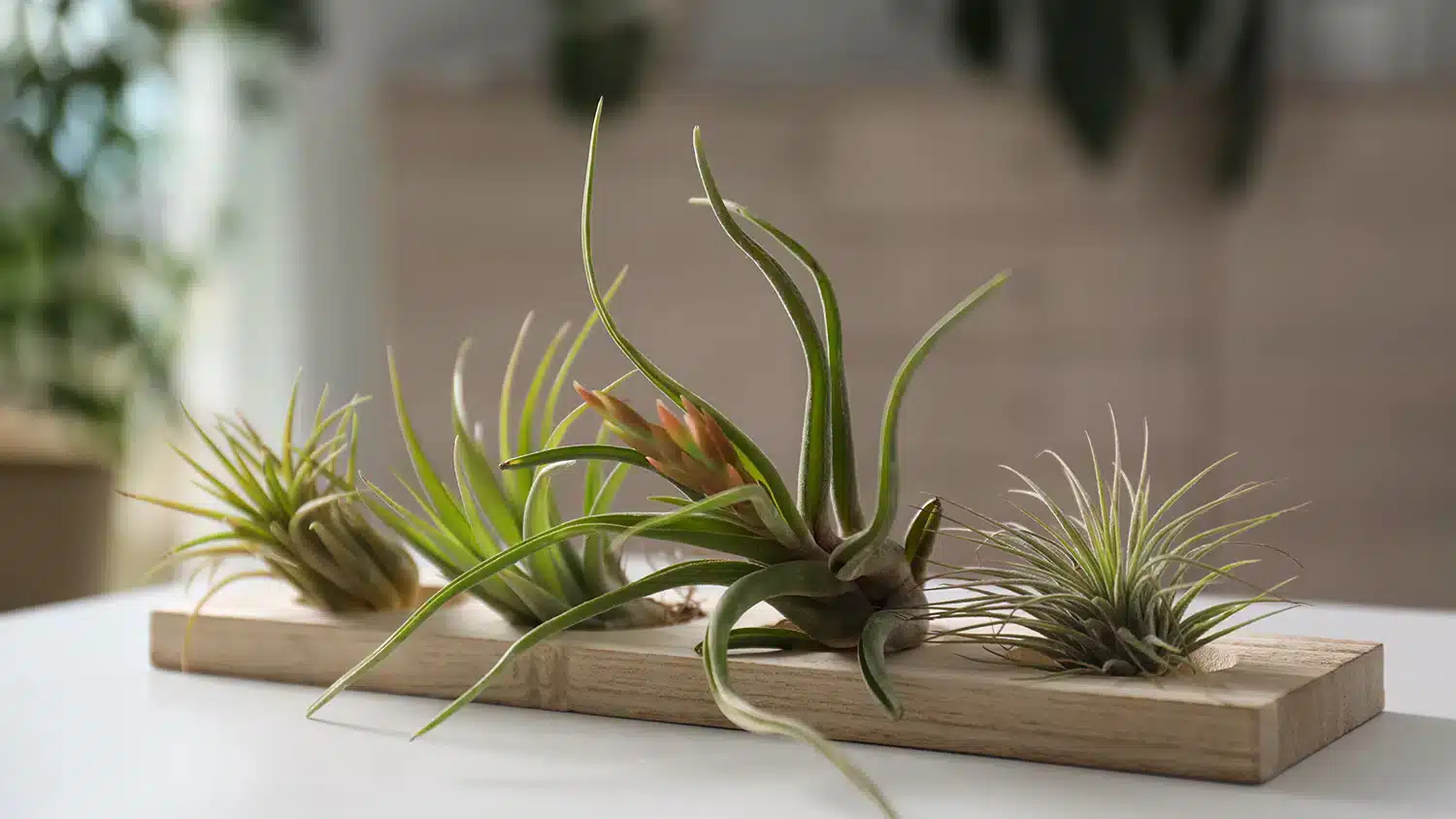
Watering a Tillandsia is a little different than watering a potted plant. The easiest way is to submerge the plant in water—preferably rainwater at room temperature. You can simply let the plants float in the water for about an hour.
2. Provide plenty of water
Make sure to water the plant regularly.
3. Let the plants dry thoroughly
After misting or soaking the plant, let it drain upside down on a piece of paper towel. This ensures that the area between the leaves doesn’t stay wet, helping to prevent mold and rot.
4. Location
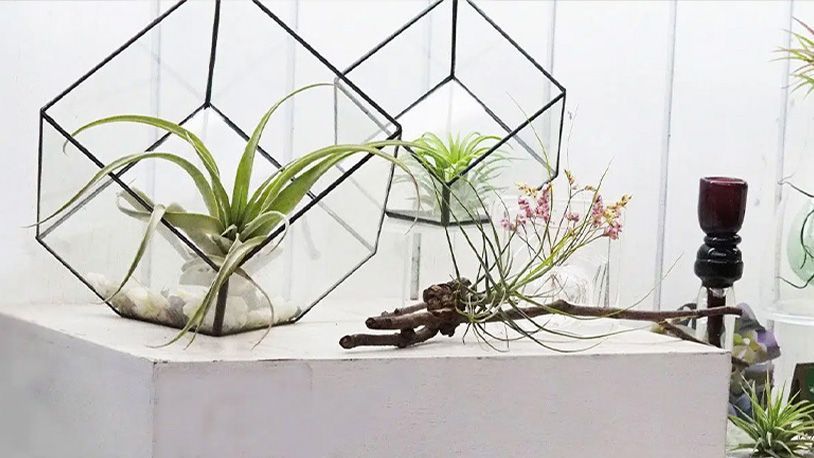
Actually, these little plants thrive just about anywhere in the house. Since they aren’t potted, you can place this easy-care mini-plant just about anywhere. Just be careful to avoid direct sunlight, as this can cause the leaves to burn and the plant to dry out.
5. Fertilization
Give your air plant an occasional boost by spraying it with Tillandsia spray. This isn't a substitute for rainwater, but just a little extra.
6. Pruning is not necessary
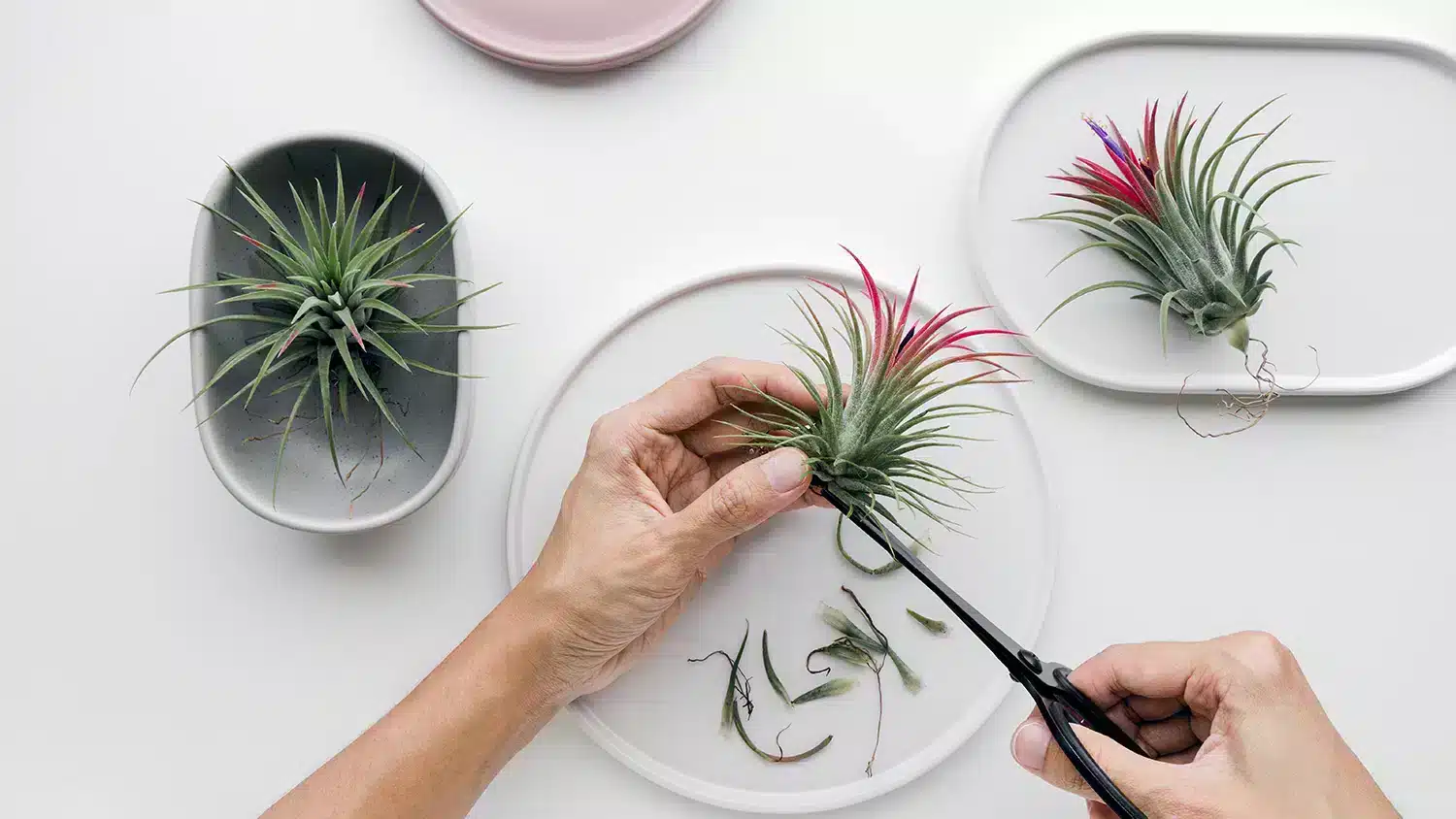
Air plants grow very slowly, so pruning won’t be necessary. You can trim off any brown tips that may appear on the older leaves over time.
7. Air supply
Since this plant lives off the air, it’s important that it gets plenty of fresh air (adequate ventilation). So make sure you don’t place the plants in a closed ecosystem.
8. Temperature
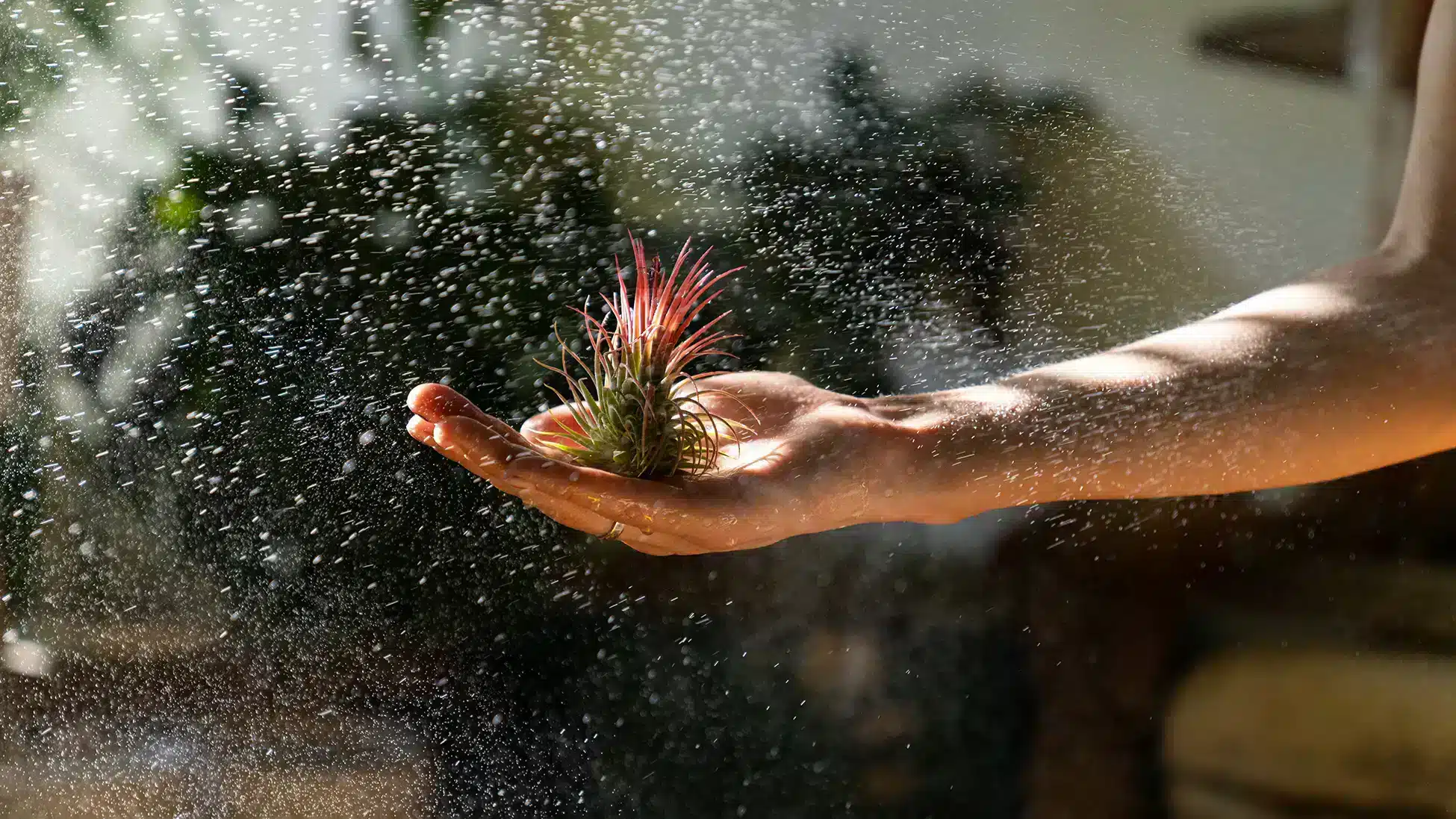
Air plants thrive best at room temperature, around 20 degrees Celsius. Make sure the plants are never exposed to temperatures below 10 degrees Celsius. On hot days, it’s a good idea to mist the air plants a little more often.
9. Humidity
Air plants get their nutrients and moisture from the air. When the humidity is low, it becomes harder for the plants to absorb all the nutrients they need from the air. For example, make sure the plants are never placed near a radiator. This causes the plants to dry out quickly.
10. Avoid drafts
Air plants love fresh, moving air, but make sure they aren't placed in a cold draft.
Frequently Asked Questions About Air Plants
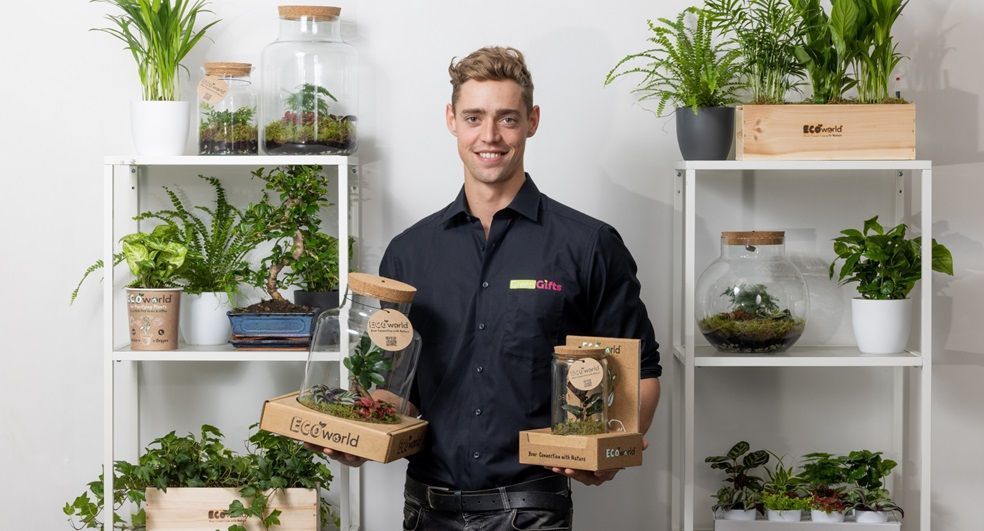
You can buy Tillandsia air plants at GreenGifts starting at €19.95. You’ll receive 5 different air plants, including decorative natural wood and an air plant spray to care for your mini plants. Plus, they’re delivered directly from our own nursery.
Tillandsias grow slowly. On average, these small plants take about two years to grow to a height of about 5 cm. If you provide your air plants with enough light and water, some varieties may even bloom within six months.
This depends somewhat on the conditions the plant is in. When it’s very hot or the humidity is low, the plant could use a little extra water. It’s also important to care for the plant properly by occasionally misting it with Tillandsia spray.
These easy-care air plants are perfect for people with pets. We grow all our plants using 100% organic methods, meaning we use no chemical additives or pesticides. As a result, our plants are non-toxic to animals.
To care for air plants, lightly mist them 1 to 2 times a week with rainwater or tap water at room temperature. For an extra boost, you can occasionally treat them with Tillandsia spray, which promotes their growth and health.
Air plants can certainly grow, but it doesn't happen quickly. They reproduce by producing small offshoots on the plant.
These cuttings are called "pups."
It’s perfectly normal for the underside of Tillandsia plants to be brown, while the stems are often green or red. This is simply part of these plants’ natural characteristics.
Although Tillandsias are soft and beautiful plants that make perfect decorations, they are also somewhat fragile. They can easily get damaged or fall apart if you handle them too much. However, this isn’t a sign of an unhealthy plant, but simply a characteristic of this delicate species.
Check out our care tips for Tillandsias here: Tillandsia Care Tips
Tip: Don’t handle the air plants unnecessarily, as this can cause them to fall apart.