


Caring for Cacti
Cactus Care: 10 Expert Tips for Caring for Your Cactus
Whether you’re a new plant lover because you’re working from home or have been caring for houseplants for years, we’re all looking for ways to brighten up our spaces and make them more beautiful these days. But perhaps you’re overlooking one type of plant that requires very little maintenance: cacti.
1. Watering a cactus

It’s best to water the mini plants thoroughly all at once. In their natural habitat, they often get drenched during heavy downpours. Afterward, make sure no water remains in the pot, as this is bad for the roots. Then let the soil dry out completely before watering again. This is about once a month during the summer and once every two months during the winter. Just like with all other plants, rainwater is recommended over tap water for cacti and succulents. Tap water contains too much lime, which is not good for the plant’s health. Also, always make sure the water is at room temperature. During the summer months, the plant requires more water than during its winter dormancy. Keep in mind that if the plant is near a heater, it can dry out more quickly.
2. Location
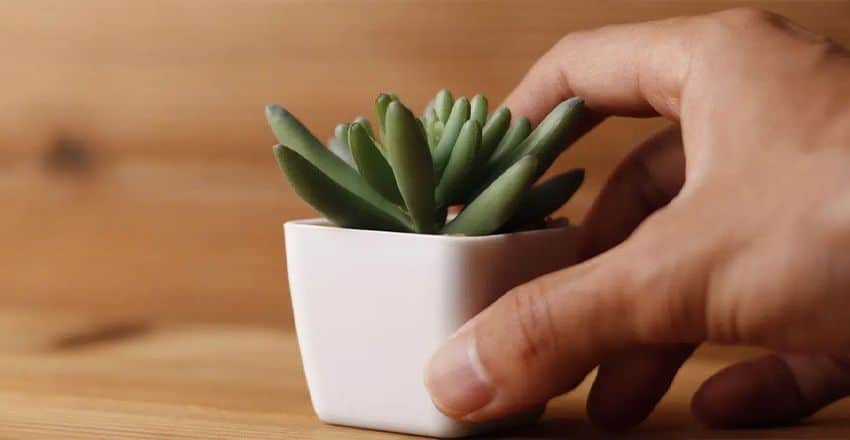
Although these plants aren’t particularly demanding when it comes to their location, they thrive best in a bright spot, such as a windowsill. Their natural habitat also typically receives many hours of sunlight each day. If the plants are kept in a spot that’s too dark, you’ll notice it because their growth will become distorted. A cactus will then lose its nice round shape and become thin, elongated, or pointed. The plant is then seeking light. During the summer months, be careful that the cactus doesn’t get sunburned. On a windowsill behind a window, it can get so hot in bright sunlight that it becomes too much even for small cacti. In that case, temporarily move them to a different (but still bright) spot.
3. Fertilization
Cacti also benefit from a little extra fertilizer every now and then. Special fertilizers have been developed specifically for cacti and succulents. Adding a capful of fertilizer to the water every so often works wonders for these plants!
4. Repotting a cactus
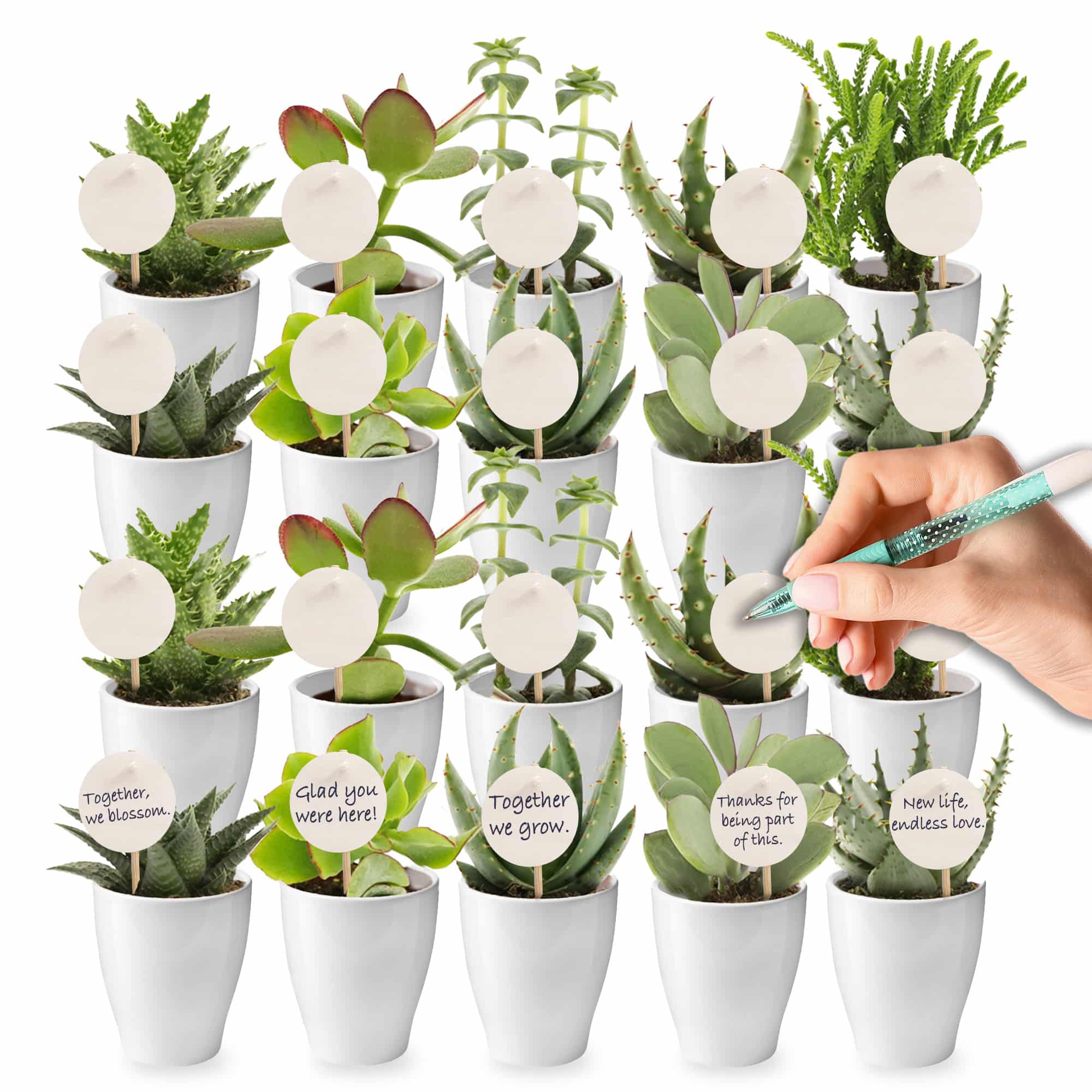
Mini Succulent Giveaway 20
• Small thank-you gifts: 20 mini succulents
• Ceramic pots Ø6cm ↥approx. 10cm
• Personalized cards Ø65mm
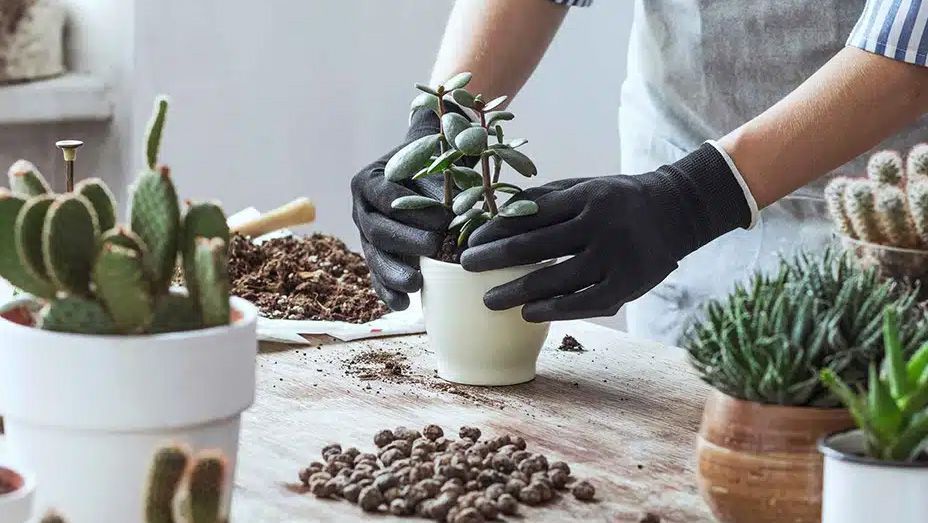
Cacti aren’t exactly fast growers, but fresh potting mix does these plants a world of good. A cactus only needs to be repotted once every four years. Be sure to always use potting mix specifically formulated for cacti and succulents, and choose a pot that’s slightly larger than the current one.
Repotting a cactus can be a tricky task because of the spines on the plant. Always protect your hands by wearing gloves, or by lifting the cactus out of the pot using a dish towel. Fill the new pot with cactus soil and carefully place the cactus back in using the dish towel. Right after repotting, the plant doesn’t need any extra fertilizer. For the first few weeks, it will get what it needs from the new soil.
5. Not enough water
It’s possible that, despite all the care tips, the plant isn’t doing very well. In that case, it’s a good idea to check a few things or try a different approach. If parts of the plant look limp or wilted, or if the plant seems to be shrinking, it may be that it hasn’t been watered enough or that it’s in a spot that’s too dark. Water the plant or move it to a different location.
6. Too much water
A cactus may also have been overwatered, which can lead to mold and rot. In that case, it’s best to carefully remove the plant from the soil and repot it in new soil specifically formulated for cacti and succulents. It’s important to ensure that excess water can always drain out of the pot by placing the plant in a pot with drainage holes at the bottom. If you put the plant in a pot without drainage holes, the excess water can’t escape, making root rot inevitable. If your cactus already has rot, you can save it by taking cuttings from the healthy part. To learn how to do this, read tip number 10: How do you take cuttings from a cactus?
7. A location that is too dark
If the plant starts to grow differently, with a thinner tip or stems, it is in a spot that is too dark. Move the plant to a brighter spot.
8. Yellow patches on a cactus
Yellow spots on a cactus are a sign that it has been exposed to too much sunlight. This can happen in the summer, when the sun is strong, if the plant is placed in a south-facing window. In that case, move it to a shadier spot or an east-facing window.
9. When does a cactus bloom?
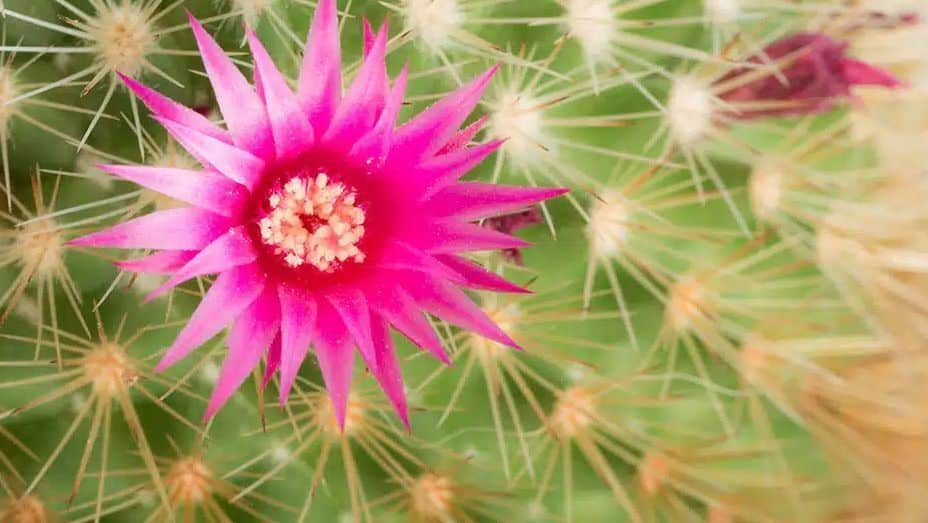
Flowering cacti, such as the Lidcactus, require slightly different care. The flowers of a flowering cactus appear after a period of dormancy. During this period (winter), the plant does not need water. Place the plant in a cool spot (around 12 degrees) and leave it undisturbed. In the spring, move the plant to a warm and sunny location and water it. During the flowering period, the plant needs to be watered regularly.
10. How do you propagate a cactus?
Since there are so many different types of cacti, there are various ways to take cactus cuttings.
Here’s how to take cactus cuttings:
Always use a clean knife when taking cactus cuttings. Cacti with multiple offshoots can be propagated by cutting off one of the offshoots. The mother plant will form new branches at the cut site. Let the cutting sit for about a week before proceeding. This allows the cut to dry out.
Then plant the cutting in new soil, specially formulated for cacti and succulents. Do not place the pot in direct sunlight, but do place it in a bright spot. Do not water the new plant until the cutting has rooted.
For cacti that consist of several small bulbs, these bulbs can easily be broken off or cut off. Place the bulbs with the cut side down on the soil, and they will root from there. The same rule applies to these cuttings: do not water until roots have formed.
Frequently Asked Questions About Cacti
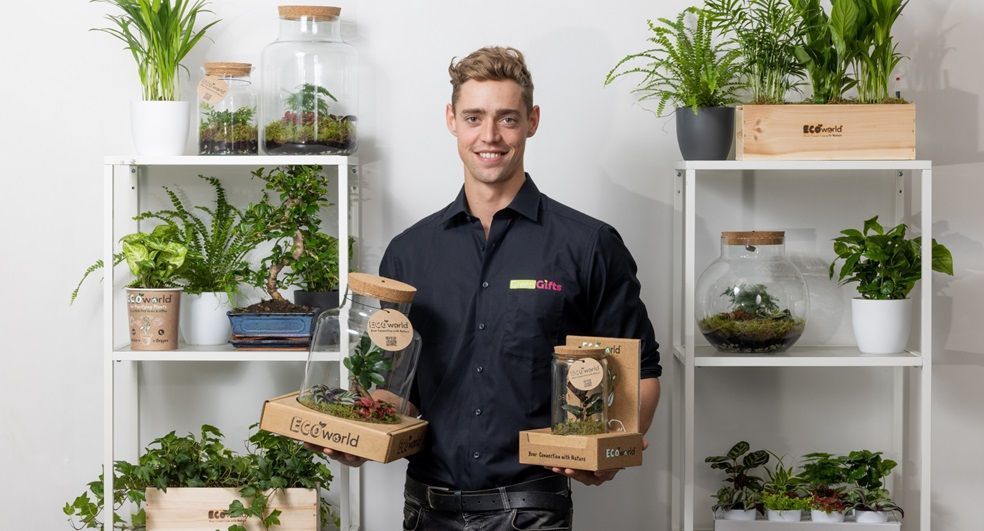
At GreenGifts, you can buy a set of 5 mini cacti for just €14.95. You’ll receive 5 different cacti, including pots. The plants are freshly harvested and delivered directly from our own nursery.
One problem with cacti that has nothing to do with pests is that the cactus becomes soft. This may be due to a lack of sunlight or water. To restore the plant’s firm texture, you can water it.
If they don't get enough light, they won't be able to use the water you give them. Your cactus will start to rot. If you stick your finger in the pot and the soil no longer feels slightly moist, then it's probably time to water your jungle cactus.
A drop of water is enough for small cacti, but larger ones need a little more water. If the pot becomes too small, you should repot the cactus. Choose a wide, shallow pot and fill it with special cactus soil. Young cacti are best repotted every year.
Let the soil dry out between waterings in the summer to prevent root rot. More water can stimulate growth, but if in doubt, wait before watering. Most cacti die indoors because they’ve been overwatered; the cactus starts to rot from the roots up.