


Caring for a bonsai tree
8 Expert Tips for Caring for Your Bonsai Tree
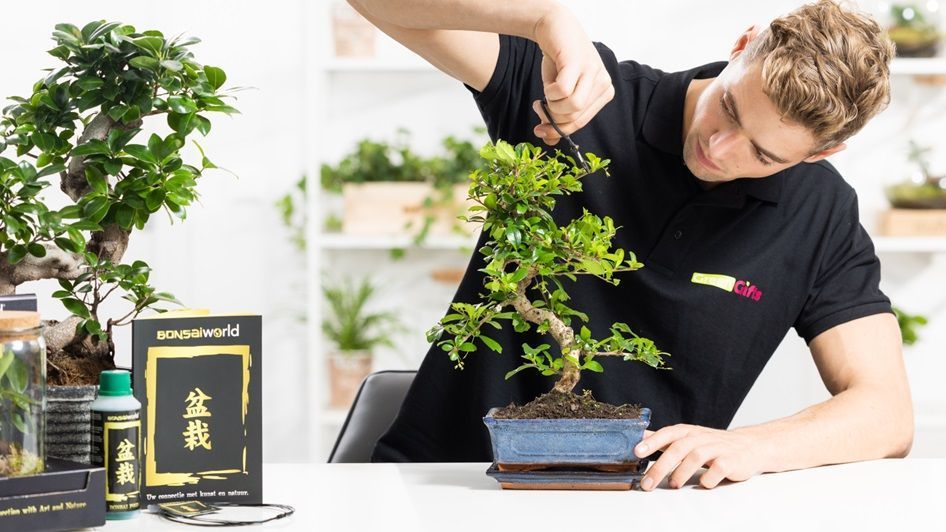
Bonsai, which literally means "plant in a pot," is the Japanese art of growing miniature trees in pots. The shape of the tree is influenced by the pruning method and the way the branches are tied using special wire. In this way, growth is manipulated so that the miniature tree closely resembles a fully grown natural specimen. We have trees of various types and sizes in our assortment. In terms of pruning style, there are two shapes: the S-shaped or spherical tree.
Upon delivery, our trees are already several years old, and with proper care, you can enjoy your new addition for a very long time.
1. Watering Bonsai
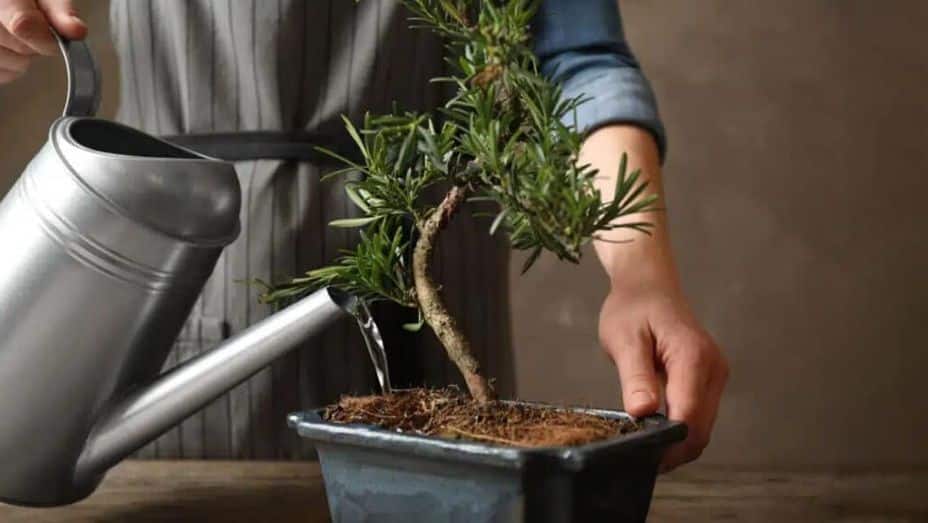
How often you should water a bonsai depends on many factors: the time of year, the size of the tree, its location, and the size of the pot. So, you shouldn’t water it according to a fixed schedule, but rather by observing your tree. It’s important never to let the soil dry out completely. Since there is relatively little soil in a bonsai pot, it won’t be able to hold much water. When the soil feels dry, the tree needs water. Give the tree small amounts of (rain)water at room temperature. Watering in small amounts at a time is important, because otherwise the water will run off the soil without giving it a chance to absorb all the water. Also make sure the roots never sit in water, as this could cause them to rot. Naturally, your bonsai will need water more often in the summer than in the winter.
2. Feeding your bonsai is a must
During the growing season, from April through October, it’s important to give your bonsai extra fertilizer. This promotes strong growth, lush foliage, and a sturdy trunk. Fertilize your tree once every two weeks with special Bonsaiworld bonsai fertilizer.
3. Leaf drop in bonsai trees
Your tree may lose a few leaves after arriving at your home. This is no cause for concern. The bonsai has just been transported, packed in a dark box, and will need time to acclimate. Place it in a bright spot but not in direct sunlight, avoid drafts, and make sure the soil doesn’t dry out. The tree will start growing new leaves again in no time.
4. Place your bonsai in a well-lit area
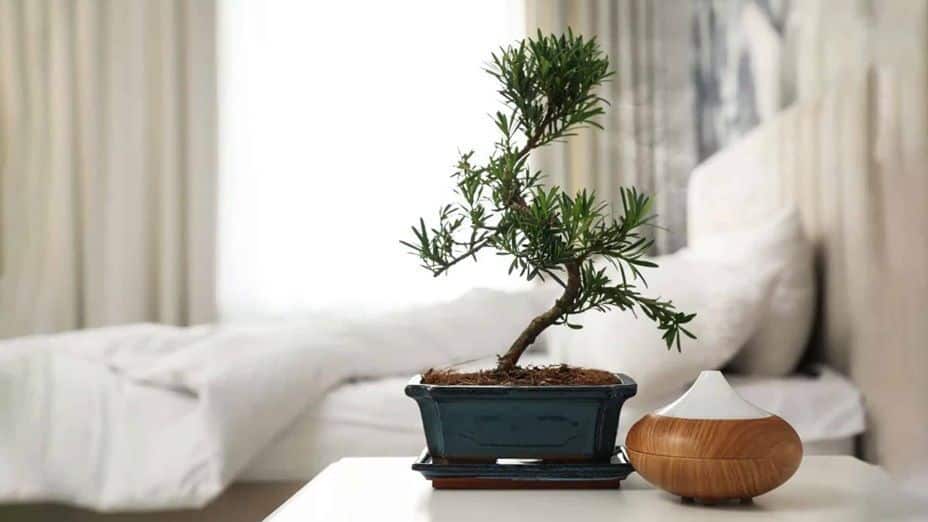
For optimal growth, a bonsai needs light. Therefore, make sure your tree is placed in a spot that isn’t too dark. However, be sure not to leave your bonsai in direct sunlight all day long. This will cause the soil to dry out too quickly, and the leaves will scorch and eventually wither.
5. Maintain a constant temperature
Of course, this applies only to indoor bonsai trees. While there are some bonsai varieties that can overwinter outdoors just fine, bonsai trees kept indoors do best at a minimum temperature of 15 degrees Celsius. Avoid hot and cold air currents. Bonsai trees are sensitive to drafts. Examples include a cold air current from the air conditioner or a warm one from the central heating. This will cause the soil to dry out quickly and the tree to lose its leaves. If this happens, it is always advisable to choose a different location.
6. Repot the bonsai once every two years
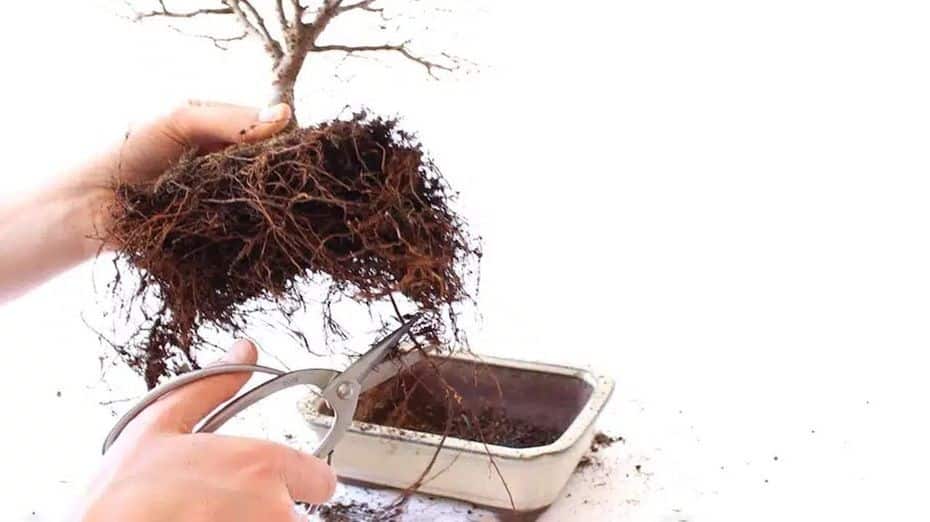
After a few years, the bonsai tree’s root system will have grown to the point where it completely fills the small pot. As a result, the tree will have difficulty absorbing water and nutrients from the small amount of soil remaining in the pot. Therefore, be sure to repot the bonsai once every 3 years. When repotting, prune the roots and add fresh, special bonsai soil to the root ball.
7. Wiring the Bonsai Tree
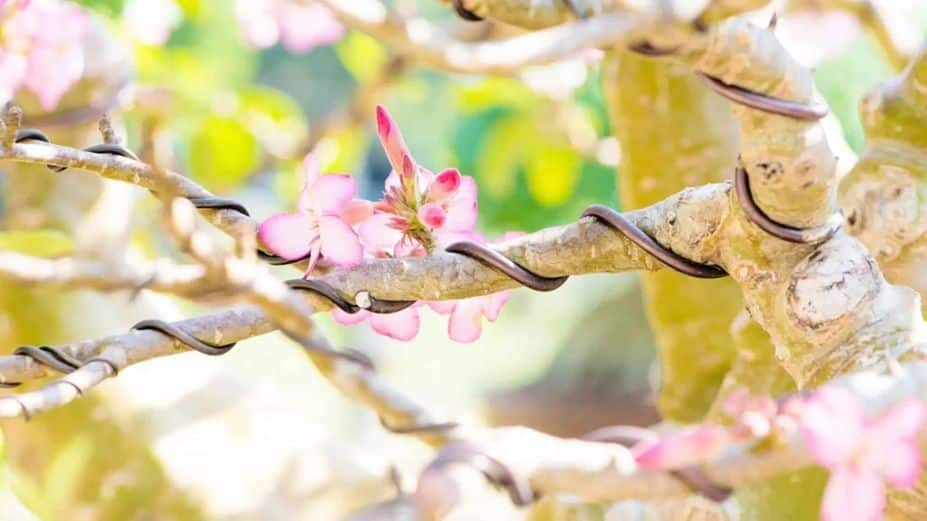
By wrapping the special bonsai wire around the branches and even the trunk in a specific way, you can guide the branches to bend in a certain direction, and over time they will set in that position. This usually happens after one growing season. Once the branch has set, you can remove the wire. If you don’t, the branch will grow into the wire.
8. Pruning a Bonsai Tree
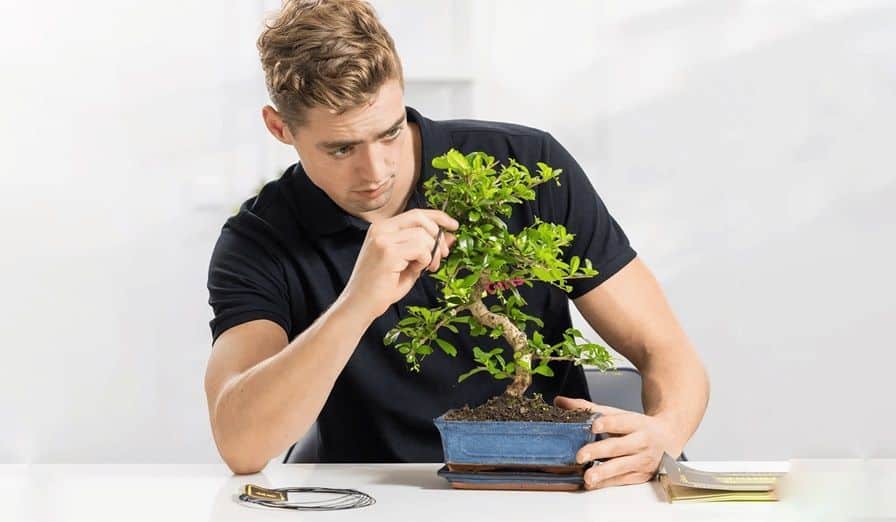
It is important to prune a bonsai tree. By trimming the outer parts of the branches, the inner parts will become denser, which is characteristic of bonsai. You should use special bonsai shears for pruning. When pruning your bonsai, it is important to keep a few things in mind:
- Prune branches that grow vertically to encourage the growth of slanting twigs
- Prune away any small branches that grow from the outside in, as they hinder the growth of the inner branches
- Focus on pruning the top and outer parts of the tree
Give your bonsai love and attention, and it will reward you
A bonsai is a very special tree that deserves plenty of love and attention. If you follow the care tips above, looking after this beautiful eye-catcher will be a piece of cake. Because we love teaching everyone more about plants, we’ve written a special Bonsai Book where we explain everything you need to know about caring for your bonsai tree. You’ll learn the best way to prune your bonsai, as well as many extra tips and tricks for caring for it. That way, you can enjoy it for a long time to come. You’re welcome!
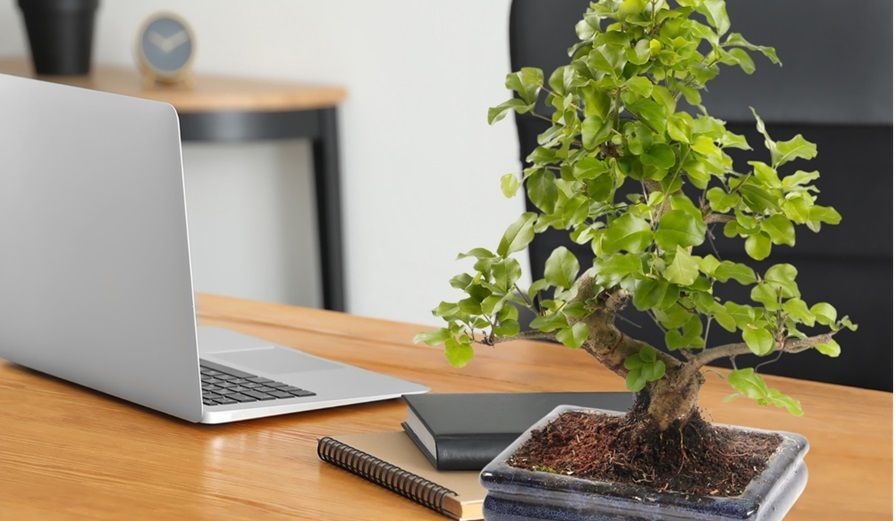
Looking to buy bonsai and supplies?
Browse our selection of bonsai trees, Bonsai terrarium lighting, and bonsai care products such as soil, wire, pruning shears, fertilizer, and a bonsai guide
Frequently Asked Questions About Bonsai Trees
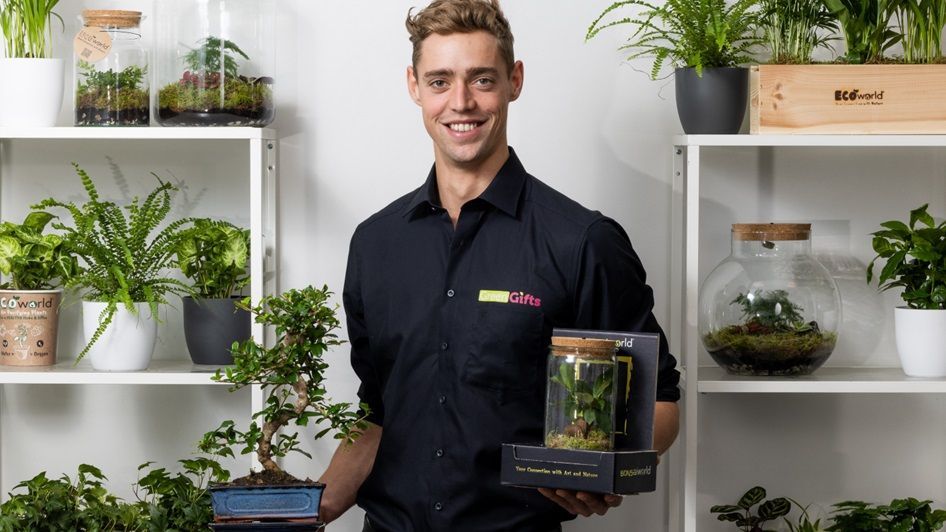
Leaf drop is quite normal, whether your bonsai is new or one you ’ve had for a while.
After delivery, the tree often loses some of its leaves because it comes from a dark box and needs to adjust to its new environment. Place it in a bright spot (not in direct sunlight or in a draft) and keep the soil slightly moist. New leaves will naturally appear within a few weeks.
Even a bonsai that you've had for a while can temporarily lose its leaves, for example due to:
-
Too much or too little water
-
Insufficient light or sudden movement
-
Drafts or dry air from heating or air conditioning
In that case, check the location and watering. Once conditions improve, the bonsai will naturally produce new leaves.
Does your bonsai look completely bare or withered? Don’t panic.
Remove the bonsai from its pot and place it on a saucer filled with water. Then leave the tree outside for two weeks in a sheltered spot, such as a patio or balcony. The bonsai will likely shed its old leaves and form new buds.
As soon as you see this new growth, you can bring it back inside, and it will continue to recover on its own.
Although your bonsai may not look its best right now, I want to reassure you that it’s probably not as serious as it seems. Our bonsai trees are exceptionally strong and resilient, having been carefully nurtured in our nursery for 12 years. Thanks to this long period of growth, they have built up natural resistance, which means they often recover well, even if they look a bit withered.
Follow these care tips to get your bonsai healthy and green again:
If the bonsai feels very dry, place the tree, along with its pot, in a deep dish filled with water. This allows the roots to absorb water directly, which is essential for recovery.
Gently remove the dead leaves by hand. This allows the bonsai to focus its energy on developing new, healthy leaves instead of wasting energy on the old ones.
Leave the bonsai in this position for 1 to 2 weeks, in a stable spot at room temperature, away from drafts and not next to a window or heater. Make sure it gets plenty of natural light, but avoid direct sunlight.
If your bonsai is too wet, stop watering it for 1 to 2 weeks until the soil feels less moist. If it has been overwatered, a short period of drought will actually do the bonsai good.
After this period, you can resume caring for the bonsai as described in the included bonsai booklet.
Is this not working? If so, try the following:
Remove the bonsai from its pot and place it in a saucer filled with water. Then leave the tree outside for two weeks, in a sheltered spot such as a patio or balcony. The bonsai will likely shed its leaves and begin to form new buds. As soon as you see this new growth, you can bring the bonsai back inside, and it will continue to grow!
With every order, you’ll receive a booklet featuring photos and names of the bonsai varieties we grow. This makes it easy to see which variety you’ve received.
The small bonsai trees in our plant terrariums are Ginseng Ficus bonsais .
The individual bonsai trees (i.e., not in a terrarium) are usually Zelkova, Carmona, or Ligustrum.
Sometimes we choose a less common variety if it is currently stronger, more attractive, or better suited for shipping.
No, that’s harmless and is usually caused by damp conditions during transport or care.
You can gently remove the mold with a soft brush or a piece of paper towel, but this isn’t necessary.
Tips for getting rid of mold:
-
Temporarily reduce watering and let the top layer of soil dry out slightly.
-
Place the bonsai in a well-ventilated spot for a while (not in a draft or in direct sunlight).
-
Do not place a dish of water under the pot.
With a little extra ventilation and less moisture, the mold will go away on its own; it’s not a sign of illness.
Yes, but for no more than one day.
Do you plan to give the bonsai as a gift later? If so, take it out of the packaging and place it in a well-lit spot (not next to a heater or window). Water the bonsai a little bit 2–3 times a week, and don’t put it back in the packaging until just before you give it as a gift. This will keep the tree in top condition.
These are often fungus gnats, which thrive in moist soil. They are harmless, but can be a nuisance.
Let the soil dry out a bit and ensure better ventilation. The gnats will then disappear on their own.
Because our bonsai trees Grown organically Grown , no pesticides are used, which means these types of gnats may appear more frequently. So there’s no need to panic—this is simply nature at work.
7 Expert Tips for Setting Up Your Bonsai Waterfall Kit
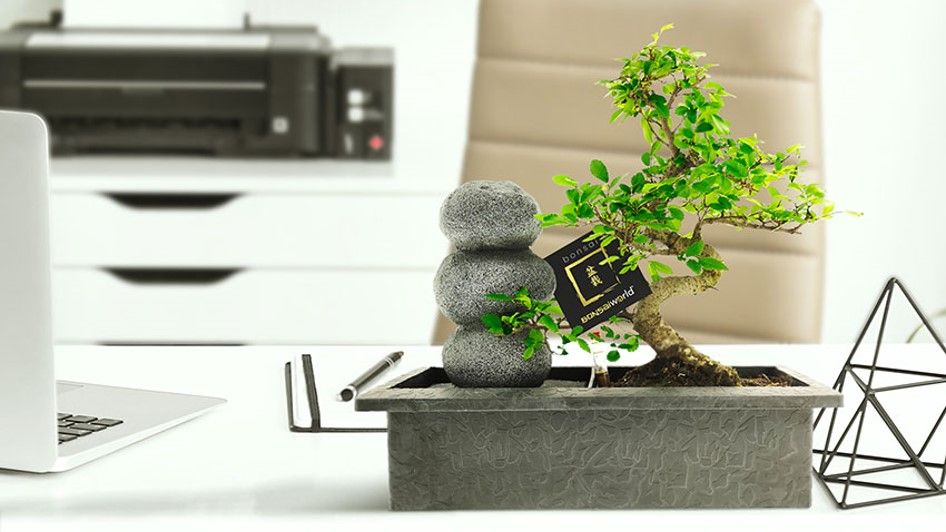
Discover our bonsai waterfall set, which includes a bonsai that we’ve nurtured with care for 10 years (3,650 days). This set brings a touch of nature and tranquility to your home or office. It’s easy to care for, making it perfect for both beginners and experienced bonsai enthusiasts. We hope you’ll take just as good care of this bonsai as we have.
1. Installation of the waterfall set
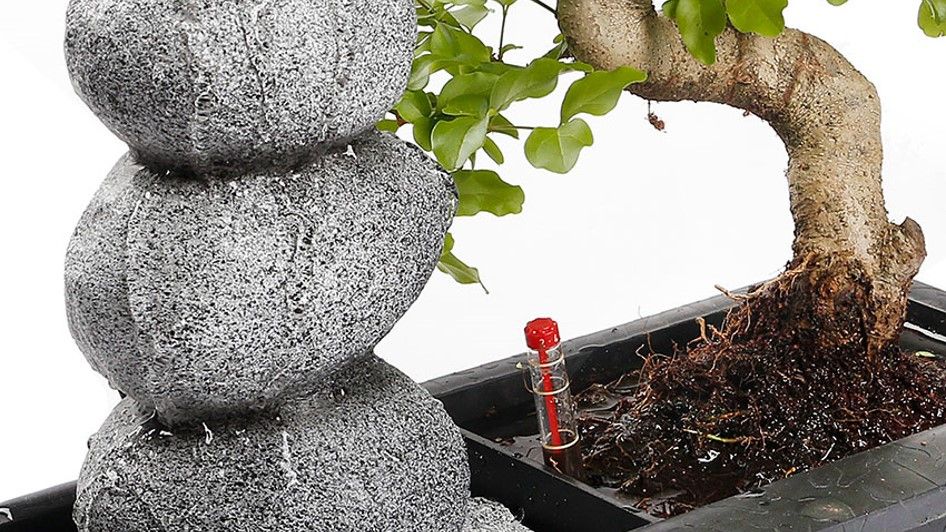
2. Water meter
Take the water gauge and place it in the opening on the side of the bonsai inner pot, with the black side facing down. Then place the inner pot back into the large bonsai pot.
3. Check and connect
Check to see if the waterfall pump is plugged in. Is it? Great! Then it’s time to plug it into the outlet so the pump can start working.
4. Watering, Part 1
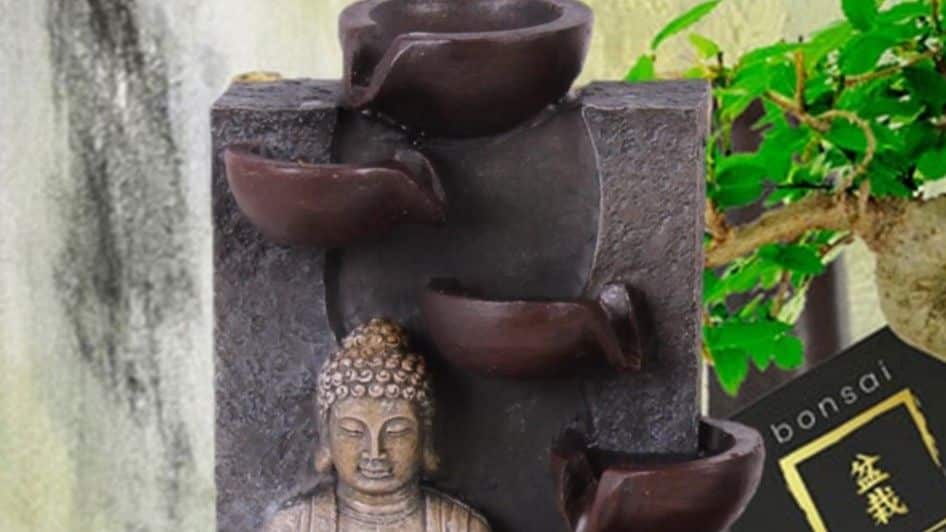
Pour water into compartment 1 (the waterfall) until the waterfall starts flowing. Note: If you hear a noise, check to make sure the pump is centered in the tank and isn’t vibrating against the side of the container.
5. Watering, Part 2
Slowly add water to compartment 2 (Bonsai) until the red ball on the water gauge has risen all the way to the top. To ensure that the soil absorbs the water properly, water the tree twice, waiting about a minute between each watering. The second time, the soil will absorb the water more effectively.
6. Water meter reading decreases
Water the bonsai every 3 days to once a week, depending on the specific needs of your unique bonsai. You can tell how often the bonsai needs water by the water gauge dropping and the soil drying out. Make sure the bonsai has “drunk up” all the water from the reservoir before watering it again. This will prevent you from overwatering the bonsai.
Tip: Does the water meter’s indicator not go up after watering? Try rinsing the water meter thoroughly under the faucet—there are probably some bits of soil stuck inside it 😉
7. Bonsai Fertilizer and Soil
Trees in nature can absorb nutrients from the soil through their roots. A bonsai is a small tree Grown in a pot. In this pot, the tree cannot use its roots to search for nutrients. That is why it is important to help the bonsai by adding one capful of Bonsaiworld Bonsai Fertilizer per liter of water once every two weeks.
Good to know...
The bonsai may lose some leaves shortly after arrival. This is completely normal, and the leaves will grow back after a while with proper care.